
Asbestos in Homes: What You Need to Know About Serious Health Risks
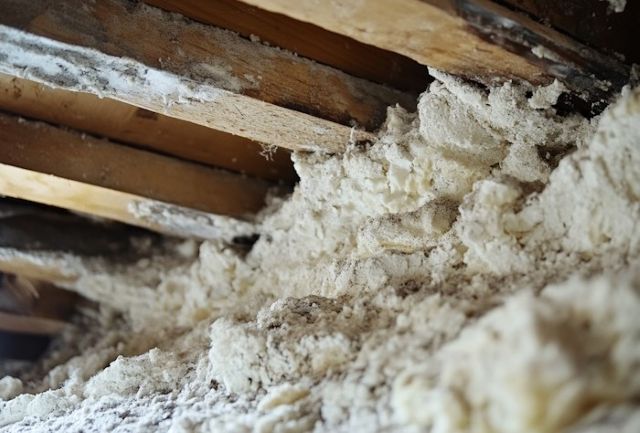
Asbestos is a group of naturally occurring fibrous minerals that were widely used in construction and industry due to their strength and fire-resistant properties.
In Canada, this topic remains relevant not because of new use, but because of the large number of buildings constructed during the period of its active use. Asbestos is still present in a significant portion of residential and commercial buildings.
However, the presence of asbestos and the level of health risk are not the same thing. The danger arises not from the material itself, but from exposure to its fibers.
This article discusses the types of asbestos, where it was used and where it remains today, how it affects health, why it was banned, and what this means in practice.
History of asbestos use in Canada
Asbestos was actively used in Canada for a significant part of the 20th century and was not only a widely used material, but also an important part of the country’s industry.
The period of most intensive use was from the 1930s to the 1970s. During this time, asbestos was used almost everywhere — in construction, industry, infrastructure, and the production of various materials. This was due to its properties: strength, resistance to high temperatures and fire, as well as good insulating characteristics.
Canada was not only a consumer, but also one of the largest producers of asbestos in the world. The main deposits were located in Quebec, and production was oriented both to the domestic market and to export.
Starting from the 1980s, the use of asbestos gradually decreased as data on its health effects accumulated and restrictions were introduced. By 1990, it was no longer supposed to be used in new construction. This is why buildings constructed before 1990 make up the majority of structures where it may still be present today.
In 2011–2012, industrial asbestos mining in Canada was stopped. The final stage was in 2018, when a full federal ban on the use, import, and sale of asbestos and most products containing it was introduced.
Thus, despite the complete ban, asbestos remains in a significant number of buildings, most of which were constructed before 1990, which directly determines the relevance of this topic today and the need to understand where it may be located.
Buildings whose construction began before 1990 and continued after 1990 are also likely to contain asbestos. Such buildings may be dated 1990 or later, since the age of a building is determined by the date it was put into operation, not the date construction began.
Where asbestos is found and which materials are more dangerous
Asbestos was used in a large number of materials, so in buildings it can be found in different places and in different forms. In most cases, this is not about a “single source,” but about several types of materials at the same time.
In residential, commercial, and industrial buildings, asbestos is most often found in ceilings, flooring, insulation, and exterior elements. Typical examples include popcorn ceilings, ceiling tiles, vinyl tiles and linoleum, adhesives and mastics under flooring, asbestos-cement panels (siding, roofing, pipes), as well as insulation for pipes, boilers, and other equipment. In industrial buildings and technical spaces, sprayed fireproofing and thermal insulation materials were also used.
It is important to understand that the same material can present different levels of risk depending on its condition. From a practical standpoint, all asbestos-containing materials are divided into two groups.
- The first is friable materials. They easily crumble and can release fibers into the air even with minimal disturbance. These include, for example, sprayed insulation, old thermal insulation materials, and some types of ceiling coatings (such as popcorn ceilings).
- The second is non-friable materials. In these, the fibers are “locked” within the structure, and in normal condition such materials are much less likely to release dust. Examples include asbestos-cement, vinyl tiles, and some types of adhesives.
Over time, even non-friable materials can deteriorate, become more fragile, and transition into a state in which they begin to release fibers.
Key point: the danger is determined not only by the type of material, but by whether its structure is disturbed. Any damage — drilling, cutting, demolition, sanding, or natural deterioration over time — can lead to the release of fibers and their entry into the air.
This is why the main risk is associated not with the mere presence of asbestos, but with its friability and with activities that disturb these materials and can lead to contamination of the air with asbestos microfibers.
Types of asbestos
Asbestos is a general term for several natural mineral compounds that are divided into two main categories: chrysotile and amphiboles. Asbestos is a clear illustration that not everything natural is harmless — asbestos is natural and at the same time very dangerous.
- Chrysotile is the most widely used type of asbestos. It was used in the vast majority of construction and household materials, including in Canada and countries of the former USSR. It was the main commercial type of asbestos. Its fibers have a curved, flexible shape.
- Amphiboles are a group of minerals that include, in particular, crocidolite and amosite. Their use was more limited and more often associated with industrial applications such as thermal insulation and fireproofing. Amphibole fibers have a straight, needle-like structure.
This difference in shape determines their behavior in the body. Amphibole fibers are significantly more устойчивы and can remain in tissues for decades. Chrysotile is potentially removed from tissues more easily by the body, but this is still a prolonged process and does not make it safe.
From a practical point of view, it is important that the difference between these types is a difference in the degree and mechanism of risk, not in the presence or absence of risk. In terms of health effects, all types of asbestos cause the same diseases.
Real risk in everyday conditions
Despite the fact that asbestos is a carcinogen, its presence in a building does not by itself mean a high health risk.
In everyday conditions, most people encounter asbestos as part of old materials that remain intact and are not disturbed. In this state, the risk of exposure remains low.
The main danger arises when materials are damaged. This occurs during renovation, demolition, replacement of покрытия, or work involving ceilings, walls, and insulation. These situations are the most common source of exposure today.
It is important to distinguish between бытовое and professional exposure. The highest risk is observed in people who have worked with asbestos for long periods in construction, industry, and insulation work. These conditions are not comparable to typical бытовые situations.
Health risks
Exposure to asbestos is not related to contact as such, but to the inhalation of its microscopic fibers. These fibers penetrate deep into the respiratory tract and can accumulate in tissues, where they persist for a long time.
The body is not able to remove them effectively. In response, chronic inflammation develops, which over time can lead to structural changes in tissues and cellular damage.
The main consequences of exposure include chronic damage to lung tissue (asbestosis), as well as malignant diseases, including lung cancer and mesothelioma — a tumor of the lining of the lungs, most characteristic of asbestos exposure.
It is important that there is no safe level of exposure to asbestos. The risk of developing these conditions is determined not by the mere fact of contact, but by its characteristics. The key factors are duration and intensity of exposure, as well as repeated exposure. It is also important to consider smoking, which significantly increases the risk of lung cancer when combined with asbestos exposure.
Another important feature is the long latency period. Diseases associated with asbestos usually do not develop immediately, but years or decades after exposure. These data are confirmed by statistics of occupational diseases.
Statistics and current occupational risks in Canada
Asbestos remains one of the leading causes of occupational diseases and mortality in Canada, despite the cessation of its use.
According to data, hundreds of deaths from mesothelioma are registered annually in Canada — a disease closely associated with asbestos exposure. At the same time, a significant number of lung cancer cases without a history of smoking are also linked to occupational exposure to asbestos.
It is important that these figures reflect not only past exposures. People continue to encounter asbestos in their work because it remains in existing buildings and infrastructure.
Those most commonly exposed are workers involved in repair, maintenance, and demolition of buildings — construction workers, electricians, plumbers, maintenance personnel, and other professions working with old materials.
Why asbestos was banned
The ban on asbestos was not a one-time decision, but the result of the gradual accumulation of scientific data and practical experience.
As it was studied, it became clear that asbestos exposure is associated with severe and often irreversible diseases, including malignant tumors. The key issue was the absence of a safe level of exposure — risk persisted even at low concentrations.
An additional factor was the large number of occupational diseases among people who worked with asbestos. In Canada, hundreds of deaths from mesothelioma are recorded annually, and a significant number of lung cancer cases are linked to occupational asbestos exposure. This led to an increase in compensation claims, legal cases, and a revision of regulatory approaches.
As a result, different countries began introducing restrictions that became increasingly strict over time. In Canada, this process took several decades: first, usage declined, then mining was stopped, and finally in 2018 a full ban on the use, import, and sale of asbestos and most asbestos-containing products was introduced.
Practice: buying and renovating real estate
When dealing with asbestos, the key factor is not theory, but practical decisions made during property purchase and renovation.
The main reference point is the year of construction. If a building was constructed before 1990, the likelihood of asbestos presence is significantly higher, and this must be considered in any work.
When buying a home, asbestos is not always automatically tested for, so risk assessment is often based on indirect signs — the age of the building and the types of materials. It is important to understand that it is impossible to determine the presence of asbestos visually, and the only reliable method of confirmation is laboratory testing.
If renovation is planned, any materials in older buildings should be treated as potentially containing asbestos until test results are obtained. Any independent opening, demolition, or handling of such materials creates a risk of exposure.
If asbestos is confirmed, work must be carried out in accordance with special requirements. This includes isolating the work area, controlling the spread of dust, and using trained professionals. Do-it-yourself removal is not recommended — it is extremely dangerous to health.
From a practical standpoint, it is also important to consider the financial aspect. Testing is usually relatively inexpensive, while removal can significantly increase renovation costs and in some cases becomes a determining factor in decision-making.
Myths and limitations
Asbestos is surrounded by a large number of simplified ideas that distort the real level of risk.
Myth: the presence of asbestos automatically means danger. Reality: risk arises only with exposure, that is, through inhalation of fibers.
Myth: asbestos can be identified visually. Reality: the appearance of the material does not allow reliable determination of its composition, and the only reliable method is laboratory analysis.
Myth: there are “safe” types of asbestos. Reality: differences between types relate to properties and degree of risk, but do not eliminate carcinogenicity.
Myth: asbestos can be “removed” from the body. Reality: currently, no such methods exist.
It is also important to consider limitations: not every contact leads to disease, and risk is determined by duration and intensity of exposure. In addition, a long period usually passes between exposure and the development of disease.
How asbestos-related diseases are diagnosed
Asbestos-related diseases are diagnosed not based on the fact of contact, but on the clinical picture, which may appear decades later.
Evaluation begins with symptoms. The most characteristic are shortness of breath, dry cough, discomfort or chest pain, reduced exercise tolerance, and unexplained fatigue. These manifestations are nonspecific and are often perceived as common respiratory conditions.
The idea that asbestos exposure may be the cause arises from the combination of symptoms and a characteristic history. The most significant are indications of occupational exposure to dust — construction, demolition, insulation work. In бытовых conditions, this is more often associated with самостоятельный renovation in older buildings: removal of popcorn ceilings, demolition of coverings, work with walls and insulation without protection.
To assess the condition, imaging methods are used, primarily CT of the chest, which allows detection of changes in the lungs and pleura. If suspicious findings are present, the next step is confirmation of the diagnosis using invasive methods such as biopsy.
Supportive measures after asbestos exposure
After asbestos exposure, the goal is not “removal of fibers,” but reduction of the consequences of exposure and control of symptoms.
First, factors that increase damage to the respiratory tract are eliminated. This includes complete smoking cessation, avoidance of secondhand smoke, and avoidance of dust, smoke, and combustion products, including smoky environments and exposure to fires.
Indoor air quality is also important. It is necessary to ensure proper ventilation and use air purifiers with HEPA filtration, especially if respiratory symptoms are present.
Symptomatic support is determined by current manifestations. In dry cough and airway irritation, the key is reducing irritants and maintaining adequate hydration. In shortness of breath and reduced exercise tolerance, it is necessary to reduce the load on the respiratory system and avoid intense physical activity during symptomatic periods.
Additionally, it is important to reduce inflammatory load and support recovery processes. This includes adequate fluid intake, nutrients with antioxidant activity, as well as support of liver and intestinal function involved in the elimination of inflammatory byproducts.
Conclusion
Asbestos remains part of a large number of buildings constructed during the period of its active use, and this is what determines the relevance of the topic today.
The key point is that the presence of asbestos and health risk are not equivalent. Danger arises with exposure, primarily when materials are disturbed and fibers are inhaled.
From a practical standpoint, this means that the main risk is associated not with living in a building, but with activities that disturb asbestos-containing materials.
Understanding this makes it possible to properly assess the situation, avoid unnecessary anxiety, and at the same time not underestimate real risks.