
The Missing B1 Link: Low Energy and Poor Focus
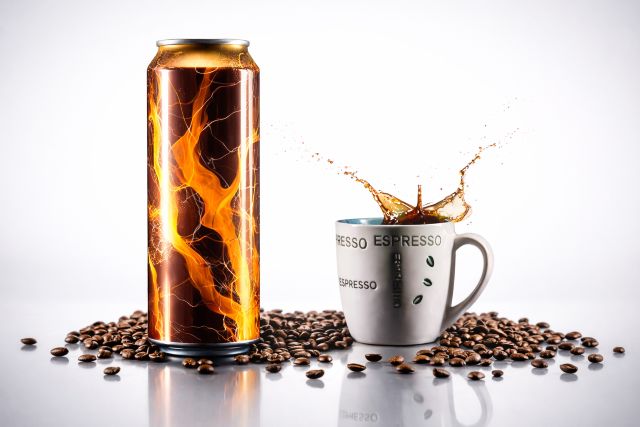
Coffee and energy drinks are usually considered different categories of products. As a result, their effects and risks are assessed separately. From a physiological perspective, in both cases the key factor is the same substance - caffeine. It is what determines the main effect: reducing the sensation of fatigue and stimulating the nervous system.
The difference between these beverages is not the substance itself, but how caffeine enters the body and in what amount. The speed of consumption, composition, and concentration directly determine the dose and the nature of its effects.
Clinical case
In 2025, a 17-year-old girl, Larissa Nicole Rodriguez (Denton, Texas), died in the United States. Information about her death is confirmed by a published obituary and multiple media reports.
According to materials presented in the media and within a lawsuit, the cause of death was identified as cardiomyopathy associated with chronic caffeine consumption. It was reported that she regularly consumed energy drinks containing about 200 mg of caffeine per can.
Toxicology testing did not reveal other substances, and she had no previously diagnosed medical conditions. This case is notable because it involved not an acute overdose, but regular consumption of a dose of caffeine that is commonly perceived as safe.
Caffeine: mechanism of action and pharmacokinetics
Caffeine is a natural chemical compound (an alkaloid) found in plants such as coffee, tea, and cocoa. It belongs to central nervous system stimulants and is used to reduce the sensation of fatigue and increase alertness.
Caffeine reduces the sensation of fatigue by blocking adenosine receptors. Throughout the day, adenosine accumulates in the brain - a substance associated with the development of tiredness. Caffeine temporarily occupies these receptors and suppresses the fatigue signal, which subjectively creates a feeling of alertness.
This is the key point: caffeine does not provide energy but temporarily masks fatigue.
As a result, nervous system activity increases, concentration improves, and sleepiness decreases. At the same time, the influence of the sympathetic nervous system increases, which may manifest as increased heart rate and a sensation of palpitations.
After intake, caffeine is rapidly absorbed, and its concentration in the blood reaches a peak within approximately 30-60 minutes. The average half-life of caffeine is 3-7 hours, but it can vary significantly. With repeated consumption throughout the day, caffeine accumulates, and its effects may last longer than subjectively perceived.
At the same time, the underlying fatigue does not disappear. While caffeine is active, adenosine continues to accumulate, but its effect remains blocked. As caffeine levels decline, receptors become available again, and accumulated adenosine binds to them, which may manifest as increased sleepiness and a noticeable crash. At this point, people often feel the need for another dose of caffeine, whether from coffee or an energy drink.
Even in the absence of a pronounced stimulating effect, caffeine can impair sleep and thereby interfere with recovery. This leads to increased fatigue the next day, and the need for caffeine increases, forming a repeating cycle.
Historical context of caffeine
Caffeine did not originally exist for humans as a standalone substance. Its consumption has always occurred through plants and beverages, and this developed independently in different regions of the world.
- Coffee originated in East Africa and spread through Yemen to the Ottoman Empire and later to Europe. By the 17th century, coffee had become part of daily life, and coffeehouses served as spaces for communication and discussion.
- Tea has been used in China for over two thousand years. Initially considered a medicinal drink, it gradually became part of everyday culture.
- Cocoa was used in Mesoamerica as a ritual product. It contains less caffeine but still has a stimulating effect.
- Caffeinated soft drinks (such as Coca-Cola) appeared in the late 19th century and became the first mass industrial source of caffeine not directly tied to traditional beverages.
In 1819, Friedlieb Ferdinand Runge first isolated caffeine in its pure form. From that point on, caffeine began to be considered as a separate substance rather than only as part of beverages.
For most of history, caffeine entered the body in forms that limited its consumption: taste, volume, and the process of drinking reduced the likelihood of consuming high doses quickly.
Modern caffeine consumption differs not because caffeine itself has changed, but because the way it is delivered has changed. The emergence of isolated forms and energy drinks has led to poorer control over both dose and speed of consumption.
Individual sensitivity
The response to caffeine can vary significantly between individuals. The same dose may cause pronounced stimulation in some people and a minimal effect in others.
There are also individuals who practically do not tolerate caffeine. Even small amounts can cause noticeable side effects, including anxiety, tremor, increased heart rate, and sleep disturbances.
These differences are largely genetically determined and are related to the rate of caffeine metabolism and receptor sensitivity. In some people, caffeine is cleared more quickly, while in others it is cleared more slowly, affecting the duration and intensity of its effects.
This means that a universal “safe” dose does not exist. Tolerance is always individual and depends not only on the amount of caffeine, but also on the specific response of each person.
Forms of consumption: coffee vs energy drinks
Caffeine content varies across different sources:
- Tea: ~30–50 mg per 240 ml
- Cocoa: ~5–20 mg per 240 ml
- Coffee: ~80–120 mg per 240 ml
- Coca-Cola: ~30–40 mg per 330 ml
This shows that coffee is the most concentrated source of caffeine among traditional beverages. Even cold coffee retains a limiting factor: the pronounced bitterness and taste of caffeine usually slow down the rate of consumption.
Energy drinks represent the next stage. One can typically contains ~80–200 mg of caffeine, sometimes up to 300 mg. Additional sources of caffeine (such as guarana) may also be present, increasing the total dose.
The key difference lies in composition and taste. Energy drinks contain sugar or sweeteners, flavorings, and acids that mask the bitterness of caffeine. As a result, the drink is perceived as easy to consume and is consumed more quickly, without a clear taste-related limitation.
They also often contain components such as taurine. It does not reduce the effect of caffeine but may decrease the subjective intensity of stimulation, reducing feelings of anxiety, internal tension, and tremor. At the same time, the cardiovascular effects remain, while the symptoms that might otherwise limit consumption are reduced or masked.
In practice, this means that energy drinks are more likely to lead to exceeding safe doses and more pronounced acute and chronic effects, even though the active substance remains the same.
Effects and risk factors
Caffeine causes acute effects on the cardiovascular and nervous systems, and with regular use leads to persistent changes.
From the nervous system, possible effects include anxiety, irritability, internal tension, and tremor. At higher doses, sleep disturbances may occur, even if caffeine was consumed several hours before bedtime.
The key risk is heart rhythm disturbances. In most cases, these are functional changes, but under unfavorable conditions clinically significant arrhythmias may develop.
With regular use, tolerance develops: the same dose produces a weaker effect, which may lead to increased consumption.
Dependence may form, manifested by the need to maintain a привычный уровень бодрости. Upon withdrawal, headache, weakness, reduced concentration, and pronounced fatigue may occur.
Fatal cases
The previously described case was far from the only one. Fatal cases associated with energy drinks are well documented. According to the monitoring system of the U.S. Food and Drug Administration, since 2004, 37 deaths have been reported in association with energy drink consumption. These data are based on spontaneous reports and do not always establish a direct causal relationship, but they reflect real adverse outcomes.
In Canada, individual fatal cases associated with energy drink consumption have also been reported. In particular, cases involving a 15-year-old adolescent (2008) and a 21-year-old young adult (2016) have been described. Unlike in the United States, systematic data are limited, and information is largely based on individual case reports.
A key role is played by dose and rate of caffeine intake. Energy drinks create conditions in which a high dose can be consumed quickly and without subjective limitations. Under these conditions, heart rhythm disturbances in severe cases may progress to life-threatening arrhythmias, such as ventricular fibrillation and cardiac arrest.
In Canada and the United States, energy drinks carry warning labels, including restrictions for children under 18 and recommendations for maximum intake. These warnings are not formalities and are based on accumulated risk data.
For adolescents, the recommended caffeine intake is limited to approximately 100 mg per day. This means that even one can of an energy drink may approach or exceed this level.
Availability and vulnerable groups
Energy drinks are widely available and sold without restrictions in most retail settings, and in real practice there is no control over consumption. Age restrictions are applied inconsistently and depend on jurisdiction, so the product effectively remains accessible to adolescents and young people.
Under these conditions, a high dose of caffeine can be consumed quickly and without control, increasing the likelihood of exceeding safe levels.
In the United Kingdom, a legislative ban on the sale of energy drinks to individuals under 16 is being discussed, reflecting how frequently they are consumed by adolescents and the need for regulation.
In Canada, no such ban currently exists. Regulatory measures are in place in Canada: caffeine content is limited to approximately 180 mg per serving, and products are required to carry warning labels, including recommendations that they should not be consumed by children. However, actual control over consumption and real-world accessibility remain limited.
Sensitivity to caffeine varies between groups. Adolescents are more sensitive to its effects, and at lower doses they are more likely to experience pronounced effects on the nervous system and the cardiovascular system. People with cardiovascular diseases are also at increased risk.
During pregnancy, caffeine crosses the placenta, and its metabolism slows down, increasing the duration of exposure. The fetus does not have a fully developed ability to metabolize caffeine, which leads to accumulation and is associated with an increased risk of miscarriage and low birth weight. Up to 200 mg of caffeine per day is the recommended limit during pregnancy.
This is the total amount from all sources (coffee, tea, chocolate, drinks).
Conclusion
Coffee and energy drinks share the same active substance - caffeine. The difference between them is determined not by the mechanism of action, but by dose, rate of intake, and conditions of consumption.
Caffeine does not create energy but alters the perception of fatigue. This allows continued activity despite already reduced resources, without addressing the underlying cause of fatigue.
Modern forms of consumption, especially energy drinks, create conditions for rapid intake of high doses of caffeine without natural limitations. This increases the risk of exceeding safe levels and developing adverse effects.
The response to caffeine is individual, and a universal safe dose does not exist. Vulnerable groups, including adolescents, pregnant individuals, and people with cardiovascular diseases, have lower tolerance and a higher risk of complications.