
Michael J. Fox’s Parkinson’s Disease Began Long Before the Tremor — and Now Science Can Detect It Earlier, Part 1

Famous Canadian actor Michael J. Fox, who played the lead role of Marty McFly in the cult trilogy Back to the Future, turned 65 on June 9. On October 2, 2026, Fox was elevated to the highest level of the Order of Canada - becoming a Companion of the Order (C.C.). This promotion from his previously received rank of Officer recognizes not only his contribution to culture, but also his many years of work supporting Parkinson’s disease research through the foundation he created.
He was diagnosed with Parkinson’s disease in 1991, when he was only 29. His story is interesting not only because of the unusually early onset of the disease. Over these decades, the very understanding of Parkinson’s disease has changed: from a disease that was recognized by tremor, stiffness and slowing of movements, - to a long destructive process in the nervous system that can begin long before obvious motor symptoms appear.
How Parkinson’s disease got its name
Parkinson’s disease was known long before it received its modern name, but the first person to bring its main signs together into a single disease was the English physician James Parkinson. In 1817, he published a small work “An Essay on the Shaking Palsy” - “Essay on the Shaking Palsy”. In it, Parkinson described six people with gradually developing tremor, changes in gait and impaired movement. Interestingly, he observed some of them literally on the streets of London. Parkinson’s main achievement is considered to be the understanding that the individual symptoms he observed were parts of the same disease.
And although Parkinson himself called the disease “shaking palsy”. The name turned out to be not entirely accurate: a person with Parkinson’s disease does not necessarily have tremor and is not paralyzed in the usual sense of the word. About half a century later, the famous French neurologist Jean-Martin Charcot significantly expanded the description of the disease. He drew attention to the fact that one of the most important signs is the gradual slowing of movements, and suggested naming the disease Parkinson’s disease in honor of the physician who first described it as a separate condition.
Michael J. Fox: the disease no one saw for seven years
Michael J. Fox’s story is worth examining in detail not only because this is an unusual case of early Parkinson’s disease beginning before the age of 30. In a certain sense, the history of the modern attitude toward this disease can be divided into the period before Fox and after him. It was Michael Fox’s public visibility and the Parkinson’s disease research foundation he created that helped radically change the direction of research: from attempts to treat already developed tremor, stiffness and slowing of movements - to searching for what happens in the body years before that. The Michael J. Fox Foundation supports the development of new medications, the search for genetic and biological causes of the disease, and the creation of methods that make it possible to detect the pathological process earlier than was possible at the time of Fox’s own diagnosis.
Michael grew up in Burnaby, British Columbia. While still a teenager, he began working in television in Vancouver. In those years, Fox looked least of all like someone who would soon develop a movement disorder. From early childhood, he was very active, played sports, began acting early, and the speed of his movements, constant gesturing and lively facial expressions became part of his acting style.
When Michael turned 20, an extremely demanding lifestyle was added to this. While working simultaneously on “Family Ties” and “Back to the Future”, his schedule sometimes left only a few hours for sleep. He worked a lot, smoked, drank alcohol, ate irregularly and often ate in inexpensive fast-food restaurants. Later, trying to understand why the disease appeared so early, Fox repeatedly returned to this period of his life and said that everything that happened afterward was the price for his lifestyle in his youth.
However, this does not mean that chronic stress, alcohol or lack of sleep by themselves caused his disease. Searching for one single cause generally does not fit Parkinson’s disease well. It can develop over decades, and during this time the body is affected by many factors - from hereditary predisposition and previous illnesses to lifestyle and environmental toxins. In one person, such exposures may pass practically without consequences, while in another - against the background of an existing vulnerability of the nervous system - they may gradually contribute to the development of the disease.
Michael J. Fox’s first symptoms
Before the tremor appeared, he had been troubled for some time by pain and stiffness in his shoulder, which he considered an ordinary injury. Then, in 1991, while working on “Doc Hollywood”, the little finger of his left hand began to move involuntarily. It was then that he was diagnosed with early-onset Parkinson’s disease - this is what cases are called when the disease begins before the age of 50. Such cases account for only a small proportion of all patients, so with such an early onset, physicians pay especially close attention to the possible role of heredity.
Fox later said that doctors explained to him that by the time the first tremor appeared, the brain’s dopamine system had already been substantially damaged. Dopamine is a substance through which certain brain cells transmit signals necessary for smooth and automatic movements. In popular retellings of Fox’s story, the figure “70% loss of dopamine even before the first symptom” is often mentioned. Today, specialists treat such a precise figure more cautiously: it is necessary to measure the number of dead nerve cells, the number of preserved nerve endings and the degree of disruption of dopamine signal transmission - and these are not the same thing. But the main meaning remains: the first noticeable tremor was not the first day of the disease.
How Fox hid his diagnosis
For the next seven years, Fox hid the diagnosis very effectively. He learned to keep the trembling hand occupied with objects, hide it, use furniture and his own mobility so that involuntary movements looked like a natural part of the character’s behavior. But there was another side of his work that was completely invisible to the viewer - the constant calculation of how the medications worked. It was necessary to understand in advance when the medication would begin working, how long it would control the symptoms well and whether that would be enough until the end of the scene or filming episode.
This is especially well shown in the 2023 documentary “STILL: A Michael J. Fox Movie”. The archival fragments from films and television series shown in it demonstrate how professionally and artistically Fox hid the tremor: he changed his body position, held objects in his hands, constantly moved and wove all of this so naturally into the role that a viewer who did not know about the diagnosis could hardly understand the real reason for these movements.
Why do medications stop working in Parkinson’s disease?
As Parkinson’s disease progresses, the effect of medications can become increasingly uneven. The period when the medication works well and it is easier for the person to move is called the period of good medication effect. Then the effect of the next dose begins to weaken, and symptoms gradually return. Over time, it became increasingly difficult for Fox to adjust filming to such intervals. When the effect of the pill was no longer always enough to calmly finish a scene, hiding the disease became practically impossible.
Because viewers and journalists did not know the real reason for what was happening, speculation began to appear that Michael J. Fox might already have passed the peak of his popularity and that his career was declining. At the same time, some of the changes the public saw on screen were connected not with a loss of acting ability at all, but with a disease that he had told no one about except his wife. By 1998, when hiding the symptoms during filming of “Spin City” was becoming increasingly difficult, Fox decided to explain to everyone what was happening to him. It was then that he first publicly disclosed his diagnosis.
After that, the disease stopped being something he had to hide at any cost. In subsequent roles, the features of his movement could already become part of the character. But a much more serious consequence of his decision to speak openly about Parkinson’s disease was the creation in 2000 of The Michael J. Fox Foundation for Parkinson’s Research. Despite the fact that the disease continues to progress, Michael J. Fox is still acting today.
The Michael J. Fox Foundation for Parkinson’s Research (MJFF)
From the very beginning, the foundation chose a somewhat unusual approach to funding science: money was directed toward promising projects precisely at the early stage when an idea already had scientific grounds, but large pharmaceutical companies were not yet prepared to risk their own funds. This approach produced quite practical results. The foundation funded early research on an inhaled form of levodopa, later marketed under the name Inbrija, as well as a dissolvable-under-the-tongue form of apomorphine - Kynmobi. Both medications were later approved by the FDA for treating periods of reduced medication effect, when the effect of usual therapy weakens and symptoms return. Kynmobi was later withdrawn from the U.S. and Canadian markets because of limited use, but the very fact that it progressed from an early project to regulatory approval illustrates well how the foundation works. MJFF did not “invent” these medications itself - it helped the developments pass through the early and most risky stage, after which large investors and pharmaceutical companies could become involved.
What happens before the first tremor: the prodromal stage
Today it is already known that Parkinson’s disease can have a long period when the disease has already begun to develop, but its usual motor symptoms are not yet sufficient to make a diagnosis. This period is called the prodromal stage.
To study this period, the International Parkinson and Movement Disorder Society developed special risk criteria. They are fundamentally different from popular online tests of the “check five symptoms out of ten” type: different signs have completely different diagnostic value.
For example, constipation really can appear years before Parkinson’s disease, but it is so common that by itself it says little. The same applies to fatigue, anxiety, depression, urinary problems or daytime sleepiness.
A completely different weight is given to REM sleep behavior disorder, or RBD. Normally, during the phase of sleep when we see the most vivid dreams, the muscles of the body are practically “switched off,” so a person does not reproduce with movements what is happening in the dream. In RBD, this protective mechanism is disrupted: a person may talk, shout, wave their arms, hit or get out of bed, as if physically participating in the dream. Such a symptom is especially significant if it is confirmed by a special sleep study - polysomnography, during which brain activity, breathing, heart rhythm and body movements are recorded at the same time.
Another important sign is gradually worsening sense of smell. At the same time, after COVID this symptom became much more difficult to assess: sudden loss of smell after a viral infection is not the same as slow unexplained decline in the sense of smell that began without an obvious reason.
Also deserving attention is a drop in blood pressure when standing up, if it is connected with dysfunction of the nervous system that regulates vascular tone. Such a person may feel dizziness, weakness or darkening of vision when moving from a lying or sitting position to standing.
Early motor changes also do not always begin with tremor. Handwriting may become increasingly small, the voice quieter, facial expression reduced. One arm begins to swing less during walking. Finger movements become slower and smaller in amplitude, and familiar actions require more time. A person may find it more difficult to fasten buttons, use small objects or quickly repeat the same movement.
Each of these symptoms has many other causes, but gradually increasing asymmetry - when one side of the body clearly changes faster than the other - deserves particular attention.
What happens in the brain in Parkinson’s disease?
In Parkinson’s disease, nerve cells are gradually damaged in a small area of the brain called the “substantia nigra”. These cells produce dopamine and transmit it to other brain structures that help automatically initiate and regulate movements. As long as the remaining cells cope with the load, the person may notice nothing. Symptoms become visible when compensatory capacity begins to be insufficient.
But Parkinson’s disease is far from simply a dopamine deficiency. In cells, mitochondrial function is disrupted - the small intracellular structures that produce energy. Oxidative stress increases - the formation of damaging molecules that the cell does not manage to handle. Long-term inflammation in the nervous system may be maintained. Cellular “cleanup” systems are also disrupted, which normally remove damaged proteins and other unnecessary components.
A special place is occupied by the protein alpha-synuclein. Normally, it is present in the nervous system and participates in the function of nerve cells. In most cases of Parkinson’s disease, some of its molecules begin to fold incorrectly and acquire a pathological form. Moreover, pathologically altered alpha-synuclein molecules are able to promote the incorrect folding of other molecules of this protein, triggering a kind of chain reaction.
Where can the disease begin: brain-first and body-first?
Researchers increasingly say that Parkinson’s disease may begin differently in different people. One modern model identifies two proposed variants - brain-first (“brain first”) and body-first (“body first”).
In the brain-first variant, the first pathological changes in alpha-synuclein probably arise within the brain - for example, in structures related to smell or emotional regulation, - and then spread further through the nervous system. This variant is more often associated with more pronounced asymmetry: motor symptoms may initially be much stronger on one side of the body.
In the body-first variant, according to the model, the process begins primarily in the peripheral autonomic nervous system, especially in the nervous system of the intestine, and then spreads toward the brain. In such patients, long before the usual motor symptoms, REM sleep disturbances, constipation, impaired blood pressure regulation and other signs of autonomic nervous system dysfunction appear more often.
This model helps explain why in one person the first sign may be a barely noticeable change in movement of one hand, while in another, sleep disturbances, constipation and problems regulating blood pressure appear many years before the tremor. But brain-first and body-first still remain a research model, rather than a ready clinical classification that allows the disease variant to be determined unambiguously in every patient.
Fox’s history, with its very early and markedly asymmetric onset, outwardly has some features of the brain-first variant.
Why does one person develop the disease and another does not?
Age remains the main risk factor: the probability of Parkinson’s disease increases noticeably after age 60. Men develop the disease about one and a half times more often than women. Family history also matters, but most cases cannot be explained by a single inherited mutation.
The genetics of Parkinson’s disease turned out to be much more complicated than previously expected. Modern expanded genetic panels can examine more than 80 genes. But this does not mean that there are 80 equally significant “Parkinson’s genes.” Some are associated with rare inherited forms of the disease, while others are associated with other diseases of the nervous system that can outwardly resemble Parkinson’s disease.
For some genes, the association is well established. Changes in PRKN, PINK1, PARK7, SNCA and VPS35 can cause rare inherited forms. Variants in LRRK2 and GBA1 more often increase risk, but do not necessarily cause the disease. And even if a known risk variant is found in a person, this still does not mean that the disease will necessarily develop: one carrier may develop the disease, while another person with the same variant may not.
So here it is more accurate to speak about different resilience of the nervous system. In one person, mitochondrial renewal mechanisms work less effectively, in another - the systems for removing damaged proteins, while in a third the inflammatory response is regulated differently. As long as damage and recovery remain in balance, the disease may not manifest itself in any way.
Geography of Parkinson’s Disease: Why Where You Live Matters
Parkinson’s disease occurs worldwide, but its prevalence varies considerably between regions. These differences persist even after accounting for several demographic factors. Researchers are therefore paying increasing attention to environmental influences, including pesticides, industrial emissions, and other pollutants.
The “Parkinson’s Disease Belt” in the United States
In 2010, American researchers analyzed Medicare data from 1995 and 2000–2005, covering more than 450,000 patients with Parkinson’s disease annually among adults aged 65 and older. The highest concentration of cases was found in the Midwestern and Northeastern United States. These regions became known as the “Parkinson’s disease belt.”
Differences between individual counties were substantial and persisted after accounting for several demographic factors. Notably, these regions have a long history of intensive agriculture and industrial activity. Exposure to pesticides, industrial emissions, and metals has been considered among the possible explanations.
In a subsequent study, the same research group identified an association between industrial emissions of manganese and copper and the incidence of Parkinson’s disease in urban areas of the United States. However, these studies could not establish which specific environmental exposures explained the observed geographic differences, nor could they demonstrate a causal relationship.
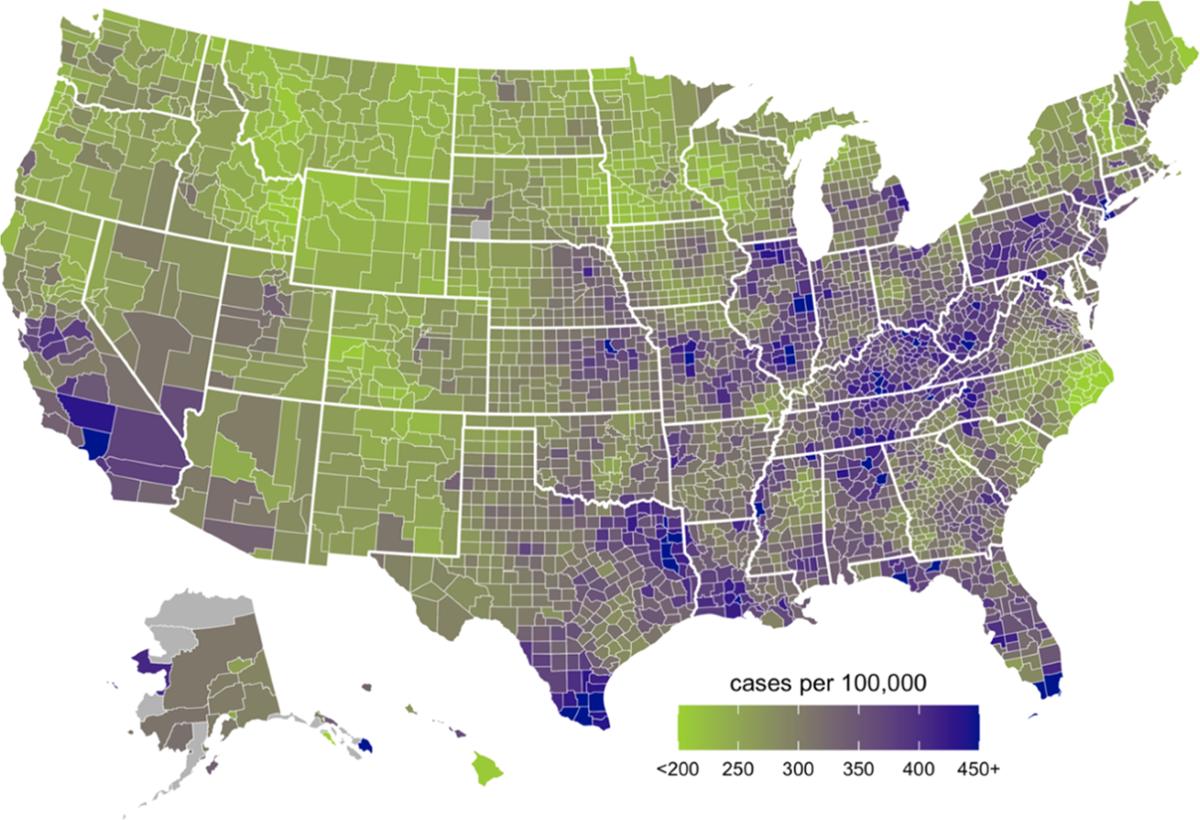
Sources: Willis et al., 2010, Neuroepidemiology; Willis et al., 2010, American Journal of Epidemiology. PubMed
Ontario: Does the Risk Change After Immigration?
Interesting findings emerged from a Canadian study published in 2021, which included 59,617 new cases of parkinsonism between 2001 and 2015. Researchers compared rates among recent immigrants, longer-term immigrants, and long-term residents of Ontario, examining Chinese and South Asian ethnic groups separately. The analysis accounted for participants’ age and sex.
The researchers found that parkinsonism was considerably less common among recent immigrants than among long-term residents. This difference diminished with longer duration of residence in Canada. Similar patterns were observed across different ethnic groups.
These findings suggest that living conditions may influence disease risk alongside hereditary factors. However, the study examined parkinsonism as a whole, rather than Parkinson’s disease specifically. In addition, the observed differences may have been influenced by immigrant selection, health status before immigration, and access to medical diagnosis.
Source: Ethnic and Immigrant Variations in the Time Trends of Dementia and Parkinsonism, 2021. PubMed
What Does This Mean?
The American study demonstrates geographic variation in the distribution of Parkinson’s disease, while the Canadian study shows an association between immigration history and the prevalence of parkinsonism. Together, these observations support the hypothesis that genetic susceptibility interacts with environmental factors.
Genetic differences may influence an individual’s sensitivity to the same toxic substances, meaning that identical exposures do not necessarily produce identical outcomes. Meanwhile, exposure to potential neurotoxins through air, water, food, or occupational activities may continue for decades before the first symptoms appear. This is why investigating the causes of Parkinson’s disease requires consideration not only of genetics and age, but also of a person’s entire residential history and environmental exposures.
Multiple-hit model
This is the basis of the so-called “multiple-hit” model. Its meaning is simple: one unfavorable factor may be insufficient to cause the disease. But it can slightly reduce the reserve of resilience. The next exposure then acts on an already less protected system, while age gradually reduces the body’s ability to recover. This may explain why two people exposed to the same factor can have completely different outcomes.
The possibility of preliminary “priming” of the inflammatory response after previous inflammation is also being discussed. In experiments, early immune activation sometimes makes certain areas of the brain more sensitive to the next damaging factor.
Therefore, in the future, researchers should be interested in conditions in which the immune system affects the basal ganglia - brain structures related to movement. These include, for example, PANS/PANDAS. But so far there are no data allowing us to claim that a child with PANS/PANDAS has an increased risk of Parkinson’s disease decades later. At present, this is only a possible biological mechanism, not a proven clinical association.