
Leafy Greens and Food Safety: What You Need to Know About Foodborne Infections
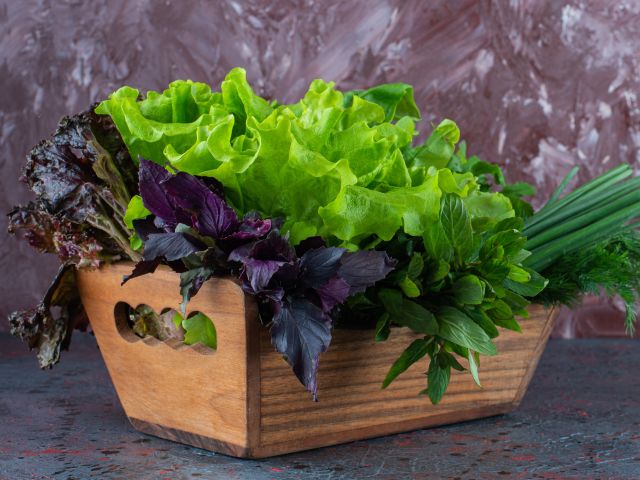
Leafy salads and other fresh leafy greens have traditionally been considered an important part of a healthy diet. They contain dietary fiber, natural folates (including folinic acid), chlorophyll, vitamin K, vitamin C, carotenoids, polyphenols, and various minerals. At the same time, most types of leafy greens are relatively low in calories, making it possible to significantly increase the nutritional value of the diet without substantially increasing its caloric content.
Regular consumption of leafy greens helps increase vegetable intake and provides the body with nutrients necessary for normal blood formation, cell division, intestinal function, immune system function, metabolism, as well as maintaining the health of the eyes, blood vessels, and bones.
Another important advantage of leafy salads is that they are usually eaten fresh. They are not subjected to prolonged heat treatment, which can reduce the content of certain heat-sensitive vitamins and other biologically active compounds. In addition, modern ready-to-eat salad mixes make it much easier to consume vegetables: the product has already been washed, chopped, and is ready to serve.
However, this very advantage also creates a certain risk. Unlike meat, fish, eggs, and many other foods, leafy salads usually do not undergo a heating step before consumption that is capable of destroying pathogenic bacteria, viruses, and parasites. Therefore, the safety of leafy salads depends on every stage of growing, harvesting, washing, packaging, transportation, and storage.
Where Can Contamination Occur?
Contamination of leafy salads can occur at almost any stage—from cultivation until the product reaches the table. For this reason, the safety of leafy greens depends on compliance with sanitary requirements throughout the entire production chain. However, even modern control systems cannot completely eliminate the risk of contamination.
During cultivation. One of the main sources of contamination is the water used for irrigation. If it contains pathogenic microorganisms, they may reach the surface of the leaves before harvest.
Another possible source is the soil. Some bacteria, viruses, and parasites are capable of surviving in the environment for long periods of time, and the use of improperly treated manure or compost may further increase the risk of contamination.
Leafy vegetables are grown outdoors, making it impossible to completely prevent their contact with the surrounding environment. Birds, rodents, and other wild animals that carry various microorganisms and parasites may enter the fields.
During harvesting. Workers’ hands, tools, containers, and agricultural equipment may become sources of contamination. To reduce this risk, producers implement sanitation protocols, although their effectiveness largely depends on how carefully they are followed in practice.
After harvest, the leaves undergo industrial washing. To reduce the risk of cross-contamination, producers monitor water quality and use approved disinfectants. However, if the process is not properly managed, the wash water itself can become a source of spreading microorganisms between large batches of products.
In some types of leafy vegetables that form a tight rosette, soil particles, bacteria, viruses, parasites, and other microorganisms may become trapped between the inner leaves, especially near the base of the plant. Such contamination is much more difficult to remove during industrial washing because the leaves are not separated individually.
Another challenge is the ability of some microorganisms to attach to the leaf surface, penetrate microscopic irregularities, and form biofilms. Such microorganisms are much more difficult to remove than contaminants located only on the surface. Damage to the leaves during harvesting, transportation, and cutting also facilitates bacterial attachment and growth because damaged plant tissues release nutrients.
An additional risk is that ready-to-eat salad mixes consist of a large number of leaves collected from different batches. If even a small amount of contaminated produce is included, microorganisms may spread to a much larger number of packages.
During transportation and storage. After packaging, salads must be kept continuously at low temperatures. Breaking the cold chain does not create contamination by itself; however, it allows certain microorganisms to multiply more rapidly. This is particularly true for bacteria capable of remaining viable and even multiplying slowly under refrigeration.
Thus, the safety of leafy salads is determined by the entire production chain—from water quality and growing conditions to transportation and storage.
What Microorganisms Can Be Found on Store-Bought Salads?
Leafy salads may be contaminated with various bacteria, viruses, and parasites. However, the presence of microorganisms on the surface of the leaves does not always lead to disease. The likelihood of infection depends on the type and quantity of the pathogen, as well as the condition of the person’s immune system.
Although most packages do not contain dangerous microorganisms, it is impossible to eliminate the risk completely. Outbreaks of foodborne infections associated with leafy greens are regularly reported in different countries around the world, confirming that under certain conditions these products can become a source of infection.
Bacteria
Bacteria are the most common cause of major foodborne outbreaks associated with leafy salads. The best-known pathogens include:
- Listeria monocytogenes – usually causes fever, muscle aches, nausea, and diarrhea. In pregnant women, newborns, older adults, and people with weakened immune systems, the infection can be severe, causing sepsis and meningitis.
- Salmonella spp. – usually causes diarrhea, fever, abdominal pain, nausea, and vomiting. In most cases, the illness resolves on its own; however, the infection may sometimes spread beyond the intestines, especially in people at higher risk.
- Pathogenic strains of Escherichia coli (STEC, including E. coli O157:H7) – cause severe abdominal pain and diarrhea, which may become bloody. In rare cases, particularly in children and older adults, kidney damage may occur.
- Shigella spp. – causes fever, abdominal cramps, and diarrhea, often with blood or mucus. Severe illness is most commonly associated with significant dehydration.
- Campylobacter spp. – usually causes fever, abdominal pain, and diarrhea. In rare cases, complications such as Guillain–Barré syndrome or reactive arthritis may develop after the infection.
Viruses
Viruses do not multiply on the surface of plants; however, they can contaminate leaves through contaminated water, contact with infected workers, or during food processing. The most important viruses include:
- Norovirus – is one of the most common causes of gastroenteritis outbreaks associated with leafy salads. It typically causes sudden nausea, vomiting, diarrhea, abdominal pain, and fever. The infection is highly contagious, and only a very small number of viral particles may be enough to cause illness.
- Hepatitis A virus – affects the liver and may cause weakness, loss of appetite, nausea, abdominal pain, fever, and later jaundice. Most people recover completely; however, the disease is usually more severe in adults than in children, and recovery may take several weeks or even months.
Parasites
Parasites are detected less frequently than bacteria; however, they have repeatedly been responsible for major international outbreaks associated with fresh leafy greens and vegetables. The best-known parasites include:
- Cyclospora cayetanensis – causes cyclosporiasis, characterized by prolonged watery diarrhea, abdominal pain, nausea, loss of appetite, marked weakness, and weight loss. Without treatment, the illness may last for several weeks or even months.
- Cryptosporidium parvum – causes cryptosporidiosis, characterized by watery diarrhea, abdominal cramps, nausea, vomiting, and sometimes fever. In healthy people, the illness usually resolves on its own; however, in people with severe immunodeficiency, it may be prolonged and severe.
- Giardia duodenalis – causes giardiasis, which may present with prolonged diarrhea, bloating, excessive gas, abdominal pain, nausea, and impaired nutrient absorption. In some people, the infection may be asymptomatic or become chronic.
How Do Manufacturers Reduce the Risk of Salad Contamination?
Leafy salad producers use a multi-step system of measures designed to reduce the risk of microbiological contamination. These measures significantly reduce the likelihood of pathogenic microorganisms entering the finished product; however, they cannot eliminate the risk completely.
Control of growing conditions. Producers evaluate the quality of irrigation water, monitor field conditions, take measures to limit access by farm and wild animals, comply with requirements for the use of organic fertilizers, and monitor other factors that may affect product safety.
Compliance with sanitation requirements. Sanitation protocols are followed throughout all stages of production to reduce the likelihood of product contamination. These include staff training, personal hygiene requirements, equipment sanitation, and compliance with production procedures.
Industrial washing. After harvest, the leaves undergo several washing stages. Processing involves not only water but also disinfectants approved for use in the food industry, including chlorine compounds, peracetic acid, ozone, and other technologies.
It is important to understand that industrial washing does not make salads sterile. The main purpose of these methods is to reduce the number of microorganisms on the surface of the leaves and, most importantly, to prevent cross-contamination, in which bacteria, viruses, or parasites from individual contaminated leaves may spread throughout an entire batch via the wash water. For most healthy people, reducing the microbial load significantly lowers the risk of infection, although for people in high-risk groups, even a relatively small number of certain pathogens may be enough to cause serious illness. If microorganisms have already attached to the leaf surface, penetrated microscopic damage, or formed biofilms, they become much more difficult to remove completely.
Storage. After packaging, salads are rapidly cooled and stored at low temperatures. This significantly slows the growth of many microorganisms but does not destroy bacteria, viruses, or parasites that are already present.
Locally grown products. Whenever possible, choose locally grown leafy greens. A shorter distance from the producer to the consumer usually means less time spent in transportation and storage, reducing the period during which certain microorganisms may multiply while also providing a fresher product.
Laboratory testing. Producers regularly test water, equipment, the production environment, and finished products for selected pathogenic microorganisms and indicator bacteria. However, laboratory testing is performed on representative samples and does not allow every leaf or every package of salad to be tested.
Product recalls (Food recalls). If information about possible contamination becomes available or laboratory testing identifies a problem, the manufacturer or government authorities may initiate a product recall. Such measures help reduce the number of illnesses; however, most recalls occur after the contaminated product has already been produced, and some of it may already have reached consumers.
Why Is It Still Impossible to Eliminate the Risk Completely?
Even with modern cultivation, processing, and sanitation practices, it is still impossible to eliminate the risk of contamination of leafy salads completely. This is due both to the characteristics of the plants themselves and to the biological properties of microorganisms.
Complex structure of leafy vegetables. In many types of leafy salads, contaminants may be trapped not only on the leaf surface but also between the tightly packed leaves of the rosette, especially near the base of the plant, where soil particles are often retained. In addition, the leaf surface contains numerous microscopic folds and depressions where microorganisms can attach. Some bacteria are capable of forming biofilms—protective structures that make them much more difficult to remove during washing.
Penetration of microorganisms into plant tissues. Some bacteria are able to enter plant tissues through natural stomata or microscopic damage that occurs during growth, harvesting, transportation, and processing. Once inside the tissues, they become less accessible to washing and disinfecting solutions.
Growth of some microorganisms during storage. Refrigeration significantly slows the growth of most microorganisms but does not always stop it completely. Some bacteria, particularly Listeria monocytogenes, are capable of slow growth even at refrigerator temperatures. Therefore, prolonged transportation and storage may gradually increase the number of bacteria if they were already present in the product.
It is impossible to test every package. Producers regularly test water, equipment, the production environment, and samples of finished products. However, only representative samples can be analyzed because it is technically impossible to test every leaf or every package of salad.
Large-scale production and wide product distribution. Modern facilities process large volumes of leafy greens every day. If contamination occurs at one stage of production, it may affect a large number of packages that are then distributed to different stores, cities, and even countries.
The combination of these factors explains why it is still impossible to eliminate the risk of microbiological contamination of leafy salads completely, even with modern production technologies.
Does the Organic Label Reduce the Risk of Contamination?
After learning about the microbiological risks associated with leafy salads, many people naturally ask whether the Organic label makes the product safer. The answer depends on which type of risk is being considered.
It is important to distinguish between chemical exposure and microbiological safety, as these are two different issues.
Chemical Exposure
Organic farming limits or excludes the use of most synthetic pesticides and a number of other synthetic chemicals. As a result, organic products generally contain lower levels of synthetic pesticide residues. For people who want to minimize their overall exposure to potentially undesirable chemicals, as well as for pregnant women, young children, and people with chronic health conditions, this may be one factor to consider when choosing foods.
At the same time, organic products are not completely free of chemicals. Organic farming also uses approved plant protection products of natural origin, and environmental contamination may result in certain substances being present in any agricultural product regardless of how it was grown.
Microbiological Safety
From the perspective of foodborne infection risk, the Organic label itself does not provide additional protection. The main sources of microbiological contamination remain irrigation water, soil, contact with animals and birds, and compliance with sanitation requirements during cultivation, harvesting, processing, transportation, and storage. These factors are equally relevant for both organic and conventionally grown leafy salads.
After harvest, both categories of products undergo similar stages of sorting, washing, cooling, packaging, and transportation. Therefore, the risk of contamination with pathogenic microorganisms depends primarily on production quality and compliance with sanitation requirements rather than on the presence of the Organic label.
Why Are Leafy Salads Receiving So Much Attention Recently?
In recent years, reports of foodborne outbreaks associated with leafy salads have indeed become much more common. This does not necessarily mean that modern leafy salads have become more dangerous. Several factors have contributed to the increase in such reports.
Improved methods of detecting infections. Modern laboratories use highly sensitive diagnostic methods, including molecular testing and whole-genome sequencing of microorganisms. This makes it possible to determine that people living in different cities or even different countries were infected with the same bacterial strain or parasite and likely consumed products from the same source. Many outbreaks that were previously considered isolated cases are now recognized as part of a single investigation.
Globalization of food production. Modern producers grow, process, and distribute large volumes of leafy greens over wide geographic areas. A single batch of salads may be shipped simultaneously to dozens or even hundreds of stores across different regions and countries. As a result, even a single source of contamination can affect far more people than it did several decades ago.
Advances in epidemiological surveillance. Today, specialists are able to compare cases of illness more quickly, analyze suspected sources of infection, and trace products from retail stores back to the producer. As a result, foodborne outbreaks are identified much more effectively than in the past.
Increased attention to the safety of fresh produce. In recent years, several major outbreaks have been associated with Escherichia coli, Listeria monocytogenes, Salmonella, and the parasite Cyclospora cayetanensis. These events have attracted the attention of both public health professionals and the media, resulting in much more frequent reports of new outbreak investigations.
Home Hydroponics – One of the Safest Ways to Grow Leafy Greens
When it comes specifically to microbiological safety, home hydroponics offers several important advantages over traditional cultivation of leafy vegetables.
First of all, plants do not come into contact with soil, which is a natural reservoir for large numbers of bacteria, parasites, and other microorganisms. Clean water is typically used for cultivation, while the composition and quality of the nutrient solution are controlled by the owner of the system.
Another advantage is the ability to maintain a high level of hygiene. Containers, reservoirs, pumps, and other equipment can be cleaned and disinfected regularly, while access of domestic and wild animals to the plants is much easier to restrict than in open-field cultivation.
Home hydroponics also makes it possible to harvest leafy greens immediately before consumption. This reduces storage time, eliminates transportation, prolonged time in retail stores, and the multiple handling stages during which secondary contamination may occur.
In addition, the owner controls the growing conditions, including water quality, the composition and quality of the nutrient solution, temperature, lighting, and the sanitary condition of the system. As a result, the impact of many factors contributing to microbiological contamination of the produce is significantly reduced.
When growing leafy greens at home, there is usually no need to use herbicides, and when pests and plant diseases are relatively uncommon, it is often possible to avoid the use of insecticides and fungicides altogether. This eliminates the risk of residues of these plant protection products remaining on the produce.
However, it is important to understand that hydroponics does not make produce completely sterile. If equipment hygiene is inadequate, contaminated water is used, or the system is not properly maintained, microorganisms can still enter the system and multiply.
When proper sanitation practices are followed, home hydroponics can significantly reduce the risk of microbiological contamination compared with traditional open-field cultivation of leafy greens.
Conclusion
Leafy salads are rightly considered one of the healthiest components of a balanced diet. They are rich in vitamins, minerals, fiber, and biologically active compounds, and their regular consumption has been associated with a reduced risk of many chronic diseases.
At the same time, leafy greens are among the foods with an increased microbiological risk because they are grown in an open environment and are most often consumed without heat treatment. Despite strict quality control, modern washing technologies, and continuous laboratory monitoring, it is still impossible to eliminate the risk of microbiological contamination completely.
It is important to understand that such cases remain relatively rare. Millions of packages of leafy salads are consumed every day without any adverse health effects, and most product recalls do not indicate that these products have become more dangerous. Rather, they reflect the fact that modern safety systems have become better at identifying potential problems and preventing the spread of foodborne infections.
By purchasing products from reliable manufacturers, following proper storage recommendations, and maintaining good kitchen hygiene during food preparation, the risk of infection can be significantly reduced. For those who want maximum control over the quality and safety of leafy greens, home hydroponics can further reduce many of the factors associated with microbiological contamination.
Therefore, there is no reason to avoid leafy salads out of fear of foodborne infections. For most people, their health benefits greatly outweigh the existing risks, especially when simple precautions are followed.