
Stroke: Hidden Dangers and Critical Warning Signs You Must Know, Part 2

For most people, a stroke appears to be a sudden event. However, the conditions that increase its risk often develop over many years without causing noticeable symptoms.
For most people, a stroke appears to be a sudden event. However, the conditions that increase its risk often develop over many years without causing noticeable symptoms.

A stroke is commonly imagined as a sudden catastrophe with obvious symptoms: paralysis, speech impairment, or loss of consciousness. In reality, however, the condition does not always develop so noticeably. A person may continue working, talking, and going about their usual activities without realizing how serious their condition is.
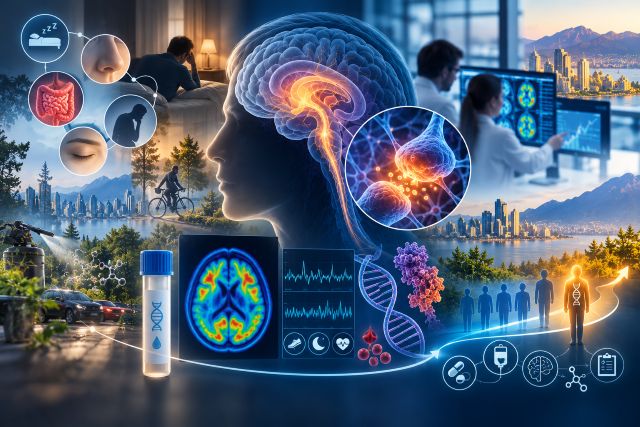
Fox spent many years trying to understand why he became ill at such a young age. He recalled head injuries, alcohol use, working and living in different places, and possible contact with chemicals. He said that he caught and ate fish from a river near pulp and paper plants, spent time on farms and may have come into contact with agricultural chemicals.

Coffee and energy drinks are usually considered different categories of products. As a result, their effects and risks are assessed separately. From a physiological perspective, in both cases the key factor is the same substance - caffeine. It is what determines the main effect: reducing the sensation of fatigue and stimulating the nervous system.

Every summer, wildfires worsen air quality in many regions of Canada. At the same time, many people do not realize that the danger exists not only near the fire itself. Smoke can be carried by air currents for hundreds and even thousands of kilometres, so air quality can deteriorate significantly in places where there is no visible fire nearby at all.

Calcium is a macronutrient and at the same time an active regulator of physiological processes. In the body, it exists not only as a component of bone tissue but also in the form of free ionized calcium, which participates in the transmission of signals between cells.

Medicine does not exist outside of time. What was considered safe and progressive in one period may appear unacceptable decades later. The reason is the limitation of knowledge, tools, and methods of risk assessment.

Medication-related edema is a common and significantly underestimated cause of fluid retention. In most cases, it is not related to primary heart or kidney disease but arises as a direct result of a drug’s effect on vascular tone, renal filtration, or hormonal balance. Such edema is deceptive because it develops gradually and is often mistaken for progression of the underlying condition.

Edema is one of the most common clinical signs that patients encounter, yet at the same time one of the most underestimated. Most often it is perceived as an everyday occurrence: “sat too long,” “it’s hot,” “uncomfortable shoes,” “age,” or “drank too much water.” Over time, a person gets used to the fact that the legs become heavier by the evening, sock marks remain on the skin, and the face looks puffier in the morning than before.

Vitamin B1 (thiamine) is one of the key vitamins on which the body’s ability to properly produce energy depends.