
Wildfire Smoke: Health Effects, PM2.5, and How to Protect Yourself
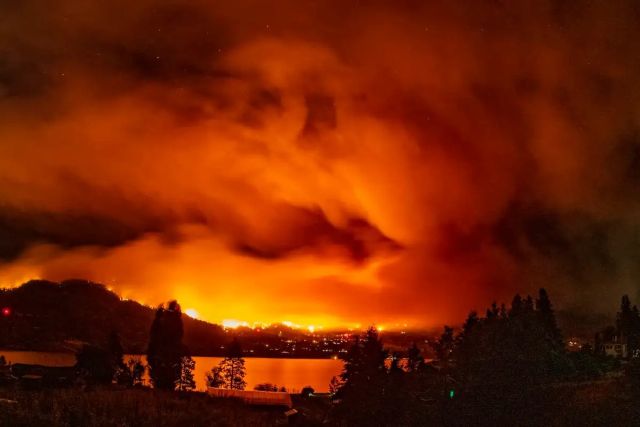
Every summer, wildfires worsen air quality in many regions of Canada. At the same time, many people do not realize that the danger exists not only near the fire itself. Smoke can be carried by air currents for hundreds and even thousands of kilometres, so air quality can deteriorate significantly in places where there is no visible fire nearby at all.
It is impossible to assess whether the air is safe based only on the appearance of the sky or smell. Sometimes smoke is obvious: visibility decreases, the sun takes on a reddish tint, and there is a smell of burning. But fine smoke particles can be present in the air even when there is no pronounced haze yet or it has already disappeared. The intensity of the smell also does not show how many harmful particles you are actually inhaling.
Therefore, during wildfire season, it is better to ask not “do I see smoke?” but another question: “what kind of air am I breathing right now?”
What exactly are we inhaling
Wildfire smoke does not consist of a single substance. It is a complex mixture of tiny particles, gases, and various products of combustion. Its composition depends on what exactly is burning, how intense the fire is, and under what conditions the burning occurs.
From a health perspective, particles referred to as PM2.5 are particularly important. PM means particulate matter - particles suspended in the air. The number 2.5 indicates their size: the diameter of these particles is 2.5 micrometres or less. For comparison, the diameter of a human hair is usually about 50-100 micrometres, meaning that PM2.5 particles are approximately 20-40 times smaller in diameter.
Size matters greatly. Larger particles are largely trapped in the nose and upper respiratory tract. PM2.5 are particles with a diameter of 2.5 micrometres or less. Among them are even smaller particles - less than 0.1 micrometre - which are called ultrafine particles.
PM2.5 can penetrate deep into the lungs and reach the alveoli - tiny air sacs where gas exchange takes place between the lungs and the blood. A small proportion of these particles can cross the barrier between the lungs and blood vessels and enter the bloodstream. The smallest particles within the PM2.5 group - ultrafine particles - cross this barrier particularly easily. Therefore, the effects of smoke exposure can involve not only the respiratory system but also other organs and systems of the body.
How to understand whether you are in a risk zone
In Canada, the Air Quality Health Index - AQHI - is used to assess the risk associated with air pollution. It shows how much of a health risk the current level of air pollution may represent.
The AQHI scale starts at 1 and ends at 10+. Values from 1 to 3 correspond to low risk, from 4 to 6 - moderate risk, from 7 to 10 - high risk, while 10+ means very high risk. The current scale and recommendations for each category can be found on the official Environment and Climate Change Canada page.
AQHI is usually calculated taking into account several major air pollutants at once: fine PM2.5 particles, ground-level ozone, and nitrogen dioxide. But during wildfires, PM2.5 concentrations can increase very quickly, sometimes within a single hour.
Therefore, during wildfire season, an additional calculation is used that is often called AQHI+. It is based on the current hourly concentration of PM2.5. The regular AQHI and this additional measure are calculated at the same time, after which the higher of the two values is published.
There is no need to look for a separate “AQHI+” value on the website. You still simply see AQHI - the system makes this adjustment automatically. This approach was originally developed in British Columbia and is now used during wildfire season across almost all of Canada.
It is best to check AQHI immediately before you plan to spend a long time outdoors, exercise, work in the yard, or go for a walk with a child. Air quality can change noticeably within several hours.
For residents of British Columbia, it is convenient to use the official B.C. Air Quality Health Index page or the AQHI for British Columbia on Environment Canada page. There you can see the current risk level and forecast for different areas of the province.
You can also install the official WeatherCAN app, where the local AQHI is displayed together with the weather forecast. The app can also provide notifications about changes in air quality, which is convenient on days when conditions are changing rapidly.
During wildfire season, it is also useful to check the official B.C. Air Quality Warnings. These warnings are issued when air quality has already deteriorated or is expected to deteriorate to a level that may pose a health risk.
It is also convenient to use IQAir. On its map, you can see the current PM2.5 concentration, the history of changes, forecasts, and data from individual stations in your area. This is especially useful if you want to see differences between different parts of a city.
At the same time, it is important not to confuse the indicators. IQAir shows AQI, while official Canadian sources show AQHI. These are different systems, so their numbers cannot be compared directly. For official recommendations in British Columbia, it is better to rely on AQHI, while IQAir is useful primarily for viewing PM2.5 concentrations and local changes.
FireSmoke.ca serves a different purpose. It does not show an actual measurement near your home, but rather a computer forecast of smoke movement and expected PM2.5 concentrations near ground level. The map can show where smoke is likely to move over the next few days. However, the actual arrival time of the smoke and its concentration may differ from the forecast, so FireSmoke should not be used instead of current air quality measurements.
Thus, AQHI helps you understand what is happening with air quality now, IQAir provides additional local information, and FireSmoke helps estimate where the smoke may move.
What happens with prolonged or repeated exposure
The effects of smoke exposure lasting several hours or days have been studied best. During significant smoke events, the number of emergency department visits and hospitalizations for respiratory diseases increases.
Worsening of the condition of people with asthma and chronic obstructive pulmonary disease - COPD - is particularly well established. This is a group of chronic diseases in which the normal movement of air through the lungs is impaired; examples include chronic bronchitis and emphysema.
There is also evidence of increased cardiovascular risks. Air pollution can worsen existing heart and vascular diseases and increase the likelihood of serious complications in people who are at risk.
Smoke exposure during pregnancy is also being studied separately. There is evidence of a possible association between significant exposure and certain adverse pregnancy outcomes, including lower birth weight.
As for exposure that repeats year after year over many smoke seasons, there is considerably less data so far. Possible effects on the nervous system, cognitive function, and the risk of certain chronic diseases are being studied, but research is ongoing. This does not mean that long-term exposure is safe - we simply cannot yet accurately determine the magnitude of this long-term risk.
What symptoms can smoke cause
A mild reaction to smoke may include irritation of the eyes, nose, and throat, headache, a mild cough, runny nose, or increased mucus production. These symptoms often decrease after moving into a place with cleaner air.
More serious symptoms include a pronounced or worsening cough, wheezing, a feeling of shortness of breath, an asthma attack, dizziness, chest pain or pressure, pronounced palpitations, or a sensation of an abnormal heart rhythm.
It is important to remember that the absence of symptoms does not mean the absence of exposure. One person may begin coughing almost immediately at a certain PM2.5 concentration, while another person at the same pollution level may not notice anything unusual.
Who is especially vulnerable to smoke
During heavy smoke, everyone is exposed. It is not necessary to have a chronic disease for smoke to affect health.
However, some people are more vulnerable. These include young children, pregnant women, older adults, people with asthma, COPD, and other chronic lung diseases, people with heart and vascular diseases, as well as patients with certain other chronic conditions.
People who spend a lot of time outdoors for work, such as construction workers, gardeners, couriers, and road workers, also have increased exposure.
Children require additional attention for two reasons. Their respiratory system is still developing, and children are usually considerably more active than adults. They may spend several hours running, playing, or participating in sports outdoors and during that time inhale a large volume of polluted air.
What happens in the body when smoke is inhaled
The first effects are usually related to direct irritation of the mucous membranes. Burning or dryness of the eyes, irritation of the nose and throat, coughing, a feeling of congestion, and increased mucus production may occur.
When fine particles reach the deeper parts of the lungs, the body reacts to them as an irritant and an inflammatory response develops. At the same time, the production of chemically active molecules capable of damaging cells increases. This process is called oxidative stress. The body is then forced to neutralize an additional amount of aggressive molecules produced under the influence of polluted air. If the burden becomes too great, the inflammatory response may intensify.
The effects can involve more than the respiratory system. Air pollution is also associated with effects on the heart and blood vessels. Irritation of receptors in the lungs can influence heart rate and blood pressure through the nervous system. Therefore, smoke is a particular concern for people who already have heart or vascular disease.
Why the length of time you breathe smoke matters
There is no specific number of minutes or hours after which inhaling smoke suddenly becomes dangerous. What matters is the total dose received: how polluted the air is, how long you breathe it, and how much air passes through your lungs.
The last factor is particularly important during physical activity. When running, cycling, exercising, or doing heavy physical work, we breathe much more frequently and deeply. Over the same period of time, more air passes through the lungs, and with it - more smoke particles.
Therefore, a short, calm walk and an hour of intense exercise at the same AQHI create very different burdens on the body. For example, a two-hour soccer practice for a child on a smoky day - is a very different exposure than a short, calm walk.
Repeated exposure also matters. Several consecutive days of moderate smoke cannot automatically be considered insignificant simply because AQHI never reached an extreme level.
Individual sensitivity should also be taken into account. AQHI is designed for the population as a whole, but people respond differently to polluted air. If at a certain AQHI level you already develop coughing, shortness of breath, respiratory irritation, or headache, that level is already sufficient reason for you to reduce exposure.
Can wildfires change the weather
A very large and intense wildfire can indeed affect local weather.
Intense burning releases an enormous amount of heat. Heated air rises rapidly, carrying smoke and water vapour with it. Sometimes this flow becomes so powerful that an actual thunderstorm cloud forms above the fire.
Such a cloud is called a pyrocumulonimbus, or pyroCb for short. It is a thunderstorm cloud formed because of extremely strong heating of the air by a wildfire.
Such a storm can produce lightning, strong wind gusts, sudden downdrafts, and sometimes hail. In rare cases, even tornadoes have been observed. Lightning is especially dangerous because it can start new fires far from the original fire.
Powerful updrafts can also lift smoke very high into the atmosphere, after which it is transported long distances by air currents.
A dense layer of smoke, in turn, can reduce the amount of sunlight reaching the surface and influence the movement of air in the lower atmosphere. Thus, wildfire, smoke, and weather can indeed interact with one another.
How to reduce the amount of smoke you inhale
The main goal during smoky conditions - is to reduce the total dose of inhaled particles.
When AQHI is elevated, the first step is to reduce unnecessary time outdoors and decrease intense physical activity.
If going outside is still necessary, a well-fitting N95 respirator can be used. It can filter out a significant proportion of very fine particles, including PM2.5. A tight fit is particularly important. If there are large gaps between the respirator and the face, air will pass around the filter and protection will be significantly reduced.
N95 does not protect against all gaseous substances present in smoke, so its purpose - is to reduce the amount of particles inhaled, not to make polluted air completely safe.
How to protect indoor air
During smoky conditions, it is better to keep windows and doors closed if the indoor temperature remains comfortable and safe.
If the home has a central heating and air conditioning system - HVAC - it is useful to use an effective air filter. HVAC - is a general term for a system that heats, cools, and circulates air in the home.
A MERV rating is used for these filters. The higher it is, the better the filter captures fine particles. For smoke, Health Canada recommends MERV 13 or higher if the particular system is designed for such a filter. A filter that is too restrictive should not be installed in a system that is not designed for it, because it may excessively restrict airflow.
Another option - is a portable air cleaner with a HEPA filter. HEPA - is a high-efficiency mechanical filter designed to capture very fine particles.
When choosing an air cleaner, it is important to consider not only whether it has a HEPA filter, but also the capacity of the device itself. For this, the CADR - Clean Air Delivery Rate - is used. It shows how quickly the device can deliver cleaned air.
If the air cleaner is too small for the room, even a good HEPA filter will not be able to keep the air effectively clean. Therefore, the device should be selected according to the size of the room and the performance specified by the manufacturer.
If it is impossible to clean the entire home, you can focus on one room. The bedroom is often the most practical option because a person spends many consecutive hours there at night. In that case, it makes sense to close the door and use the air cleaner specifically in this room, trying to maintain the cleanest possible air there. During prolonged smoky conditions, filters should be checked periodically and changed as they become dirty.
It is also better to avoid devices that intentionally produce ozone. Ozone itself irritates the respiratory tract, so this method of “cleaning” air is undesirable in a residential space.
Is it worth measuring PM2.5 inside the home
A home PM2.5 monitor can be very useful. AQHI shows outdoor air quality for your area, but it cannot tell you what is happening inside a particular home. Even two neighbouring homes can have completely different readings because of differences in airtightness, ventilation, and the effectiveness of air cleaners.
A home sensor allows you to see whether smoke is entering indoors and how well the measures being taken are working. Such devices usually show PM2.5 concentrations in micrograms per cubic metre of air. Some models also measure temperature and humidity, which is also convenient during smoke season. Devices can be found on amazon.ca for ~CA$50.00.
An inexpensive home monitor is not a laboratory instrument, so its numbers should not be regarded as an absolutely precise analysis of the air. For household purposes, it is much more important to see the trend: for example, how much PM2.5 decreased after turning on the air cleaner or how quickly it increased after opening a door or window.
Such a monitor also helps with ventilation. When outdoor air quality has improved, you can open the windows and see what happens to PM2.5 indoors. If the reading begins to rise quickly, the outdoor air is still not clean enough. If it remains low, the room can be ventilated normally.
What to do if it is hot and smoky at the same time
This is particularly important for British Columbia because periods of extreme heat and wildfires often coincide. The advice “keep all windows closed” makes sense only as long as the temperature inside the home remains safe. Severe overheating itself can pose a serious health risk.
If there is an air conditioner or heat pump - a heat pump that works as an air conditioner in summer - it should be used to cool the space.
If the home becomes too hot and it is impossible to cool it safely, it is better to temporarily move to a cooler place that has both air conditioning and air filtration. Health Canada does not recommend remaining in a dangerously overheated home solely to keep the windows closed.
What to do when the smoke is gone
When the outdoor air has genuinely become cleaner, the space can be thoroughly ventilated. Before doing so, it is better to check the current AQHI or outdoor PM2.5 concentration rather than relying only on the appearance of the sky. After a prolonged smoke episode, HVAC and portable air cleaner filters should be checked and replaced if necessary.
Some smoke particles settle on surfaces. It is better to remove them by wet cleaning and vacuuming with a good filtration system rather than raising dry dust back into the air.
If the fire occurred directly near a residential area and a large amount of ash remains around, the situation is different from ordinary smoke that has travelled from far away. When homes, vehicles, and building materials burn, a more complex mixture of combustion products is produced. In this situation, during cleanup it is better to follow the recommendations of local health authorities and emergency services.
When to seek medical attention
Mild irritation of the eyes and throat, a slight cough, or headache often decreases after a person moves into a place with cleaner air.
If pronounced or worsening shortness of breath, wheezing, severe cough, an asthma attack, dizziness, chest pain or pressure, or pronounced palpitations develop, a visit to the hospital may be necessary to obtain the required medical evaluation.
If the condition is rapidly worsening or there are signs of a possible emergency, emergency medical help should be sought by calling 911.
People with asthma, COPD, heart disease, and other conditions that may worsen with air pollution should have an adequate supply of their regularly used medications in advance and understand what to do if their usual treatment no longer controls their symptoms well enough.
How to prepare for a smoke episode in advance
Several simple things are easier to prepare before air quality deteriorates sharply:
- Know where to check B.C. AQHI, WeatherCAN, and official air quality warnings;
- Have an air cleaner with a capacity appropriate for the size of the room;
- Have a supply of replacement filters for the air cleaner and HVAC system;
- Know the maximum MERV rating allowed by your HVAC system;
- Have several well-fitting N95 respirators;
- Have a home PM2.5 monitor if you want to monitor indoor air quality;
- Have an adequate supply of regularly used medications and food to reduce the need to leave the home;
- Identify in advance a room where the cleanest possible air can be maintained if necessary;
- Know where you can temporarily go if it is impossible to maintain sufficiently clean and cool air at home at the same time.
Conclusion
Wildfire smoke - is not just an unpleasant smell or temporary irritation of the respiratory tract. Fine PM2.5 particles can penetrate deep into the lungs, and the smallest of them can enter the bloodstream. Therefore, the effects of exposure can involve not only the respiratory system but also the cardiovascular and other systems of the body.
At the same time, it is impossible to reliably determine air quality by the colour of the sky or the smell of smoke. During wildfire season, it makes sense to check AQHI regularly and, when necessary, PM2.5 concentrations and smoke movement forecasts, especially if you are planning prolonged time or physical activity outdoors.
Risk depends not only on how polluted the air is at a particular moment, but also on the duration of exposure. Several hours of intense physical activity and a short, calm walk at the same AQHI create very different burdens on the body. Several smoky days in a row also matter.
The most effective strategy - is to reduce the amount of smoke you inhale. During significant smoke, it is worth limiting unnecessary time outdoors, avoiding intense physical activity, using an N95 if going outdoors cannot be avoided, and keeping indoor air as clean as possible with appropriate filtration.
People with lung and heart disease, pregnant women, older adults, and children should pay particularly close attention to air quality. But during heavy smoke, precautions make sense for everyone.
It is much easier to prepare for a smoke episode in advance: know where to check air quality, have an appropriate air cleaner and a supply of filters, respirators, necessary medications, and a plan of action in case it becomes very smoky and hot at the same time.