
Type 1 Diabetes: Symptoms, Treatment, and New Hope for a Cure, Part 1
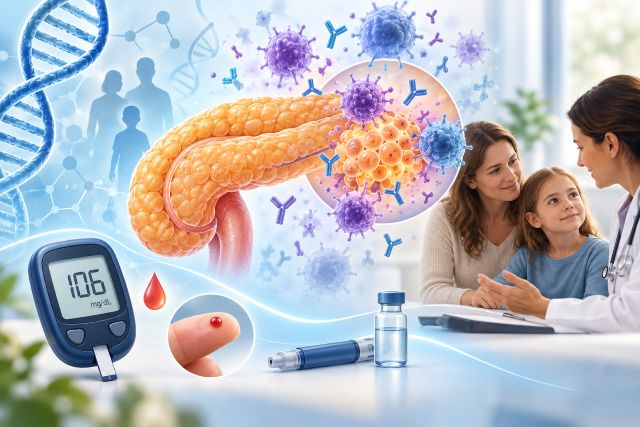
Diabetes mellitus is one of the most common chronic diseases associated with impaired regulation of blood glucose levels. However, this term encompasses different diseases that differ significantly in their causes, mechanisms of development, and approaches to treatment.
In type 1 diabetes, the immune system mistakenly attacks the β-cells of the pancreas that produce insulin. Gradually, the body loses its ability to produce this hormone, which is essential for normal glucose metabolism. The disease most often begins in childhood or young adulthood, but it can also first develop in adults.
Before the discovery of insulin, type 1 diabetes almost inevitably led to death. Insulin therapy has saved millions of lives, while modern insulin preparations, insulin pumps, and glucose monitoring systems have enabled people with this condition to live for decades. However, all these advances have primarily focused on replacing the missing insulin rather than addressing the cause of its loss.
Today, medicine is gradually approaching a solution to this problem. Scientists have learned to detect the autoimmune process long before the first symptoms appear, are investigating ways to delay the development of the disease, and have already succeeded in restoring insulin production through transplantation of pancreatic cells. Some clinical trial participants have been able to stop insulin injections completely and have maintained this result for several years.
These technologies have not yet become safe and widely accessible treatments, but they offer a fundamentally new perspective: instead of simply replacing missing insulin throughout life, it may become possible to restore the body’s ability to produce it independently.
To understand the significance of these advances, we will examine why type 1 diabetes develops, how it can be detected before symptoms appear, which treatments are available today, and how close we are to restoring the body’s own insulin production.
The History of Diabetes: From a Fatal Diagnosis to Restoring Insulin Production
Diabetes has been known to humanity for more than three thousand years. Ancient physicians described patients who experienced unquenchable thirst, produced unusually large amounts of urine, rapidly lost weight, and gradually became weaker. The cause of these symptoms remained a mystery for centuries.
The disease was particularly tragic in children and young people who, as we now know, developed type 1 diabetes. Before the discovery of insulin, this diagnosis offered almost no hope of survival. Physicians tried to prolong life through extremely restrictive diets, but they could not address the fundamental problem: the absence of the hormone necessary for the body to use glucose.
A breakthrough occurred in 1921 at the University of Toronto. Frederick Banting, Charles Best, John Macleod, and James Collip played key roles in the research that led to the isolation and purification of insulin.
In January 1922, 14-year-old Leonard Thompson, who was in critical condition, became the first patient to be successfully treated with purified insulin. His condition improved, demonstrating that a disease that had previously almost inevitably led to death could now be controlled.
By 1923, industrial production of insulin had begun. Gradually, it became available to patients in different countries, and medicine gained the ability not only to save lives during severe deterioration but also to sustain patients for decades.
Over the following century, treatment changed beyond recognition. The first animal-derived insulin preparations were replaced by synthesized human insulin, followed by insulin analogues with different durations of action. Home glucose meters enabled patients to monitor their own glucose levels, while insulin pumps and continuous glucose monitoring systems made diabetes management considerably more precise.
But throughout this time, one fundamental problem remained: even the most advanced medications and devices could only replace the function of the pancreatic cells that had been lost.
How Type 1 Diabetes Differs from Type 2 Diabetes
Although both diseases are associated with elevated blood glucose levels, the reasons for this increase are different. In type 2 diabetes, the body usually initially retains its ability to produce insulin. The main problem is that tissues become less sensitive to its action. The pancreas attempts to compensate by increasing insulin production, but over time its capacity may decline.
Therefore, in type 2 diabetes, dietary changes, physical activity, reduction of excess body weight, and medications can significantly improve glucose metabolism and, in some patients, make it possible to achieve remission without insulin therapy.
Type 1 diabetes is different: the immune system destroys the very cells that produce insulin. Lifestyle changes can improve overall health and help manage glucose levels, but they cannot replace the missing hormone.
How Type 1 Diabetes Presents: Early Symptoms
Type 1 diabetes can develop unnoticed over months or even years while the remaining pancreatic cells continue to produce enough insulin. However, when insulin levels become too low, symptoms often appear quite rapidly, sometimes within days or weeks.
One of the first signs is intense thirst and frequent urination. When blood glucose levels rise significantly, the kidneys begin excreting excess glucose in the urine. This causes the body to lose large amounts of water, so the person feels constantly thirsty, drinks frequently, and urinates often, including at night. Young children may begin bedwetting again, even if they had previously outgrown this problem.
Another characteristic symptom is unexplained weight loss, sometimes despite a good or even increased appetite. Because the body cannot fully utilize glucose, it begins using its own fat and muscle reserves for energy.
Severe fatigue, weakness, and drowsiness are also common. A person becomes tired more easily, finds everyday activities more difficult, and has trouble concentrating. Blurred vision may also occur because rapid changes in glucose levels affect the fluid content of the eye’s lens.
In children, parents may notice behavioural changes: the child becomes less active, more irritable, asks for drinks more often, wakes up at night, or begins losing weight. In adults, early symptoms are sometimes mistakenly attributed to overwork, stress, or other medical conditions.
If insulin deficiency progresses, nausea, vomiting, abdominal pain, an acetone-like smell on the breath, and unusually deep, rapid breathing may develop. These are possible signs of diabetic ketoacidosis, a dangerous complication requiring immediate medical attention.
The combination of intense thirst, frequent urination, and unexplained weight loss is a serious reason to check blood glucose levels without delay.
What Happens in the Body in Type 1 Diabetes
Glucose is one of the body’s main sources of energy. It enters the bloodstream after carbohydrates are digested and is also produced by the liver, which helps maintain the necessary glucose level between meals and during sleep.
For muscle and fat cells to use glucose effectively, they need insulin. This hormone is produced by specialized cells in the pancreas called β-cells, which are arranged in small groups known as the islets of Langerhans.
After a meal, when glucose levels rise, the pancreas releases more insulin. Under its influence, cells begin taking up glucose more actively, the liver stores some of it as glycogen, and the liver reduces its own glucose production. When blood glucose decreases, insulin secretion also declines.
In a healthy body, this process is regulated continuously, almost without the person noticing it. In type 1 diabetes, something fundamentally different happens. The immune system, which should protect the body from infections and other threats, begins to recognize its own β-cells as targets. T lymphocytes, immune cells capable of recognizing and destroying specific cellular structures, play the leading role in this destruction.
This process usually develops gradually. For some time, the remaining β-cells continue to produce enough insulin, so a person may feel completely healthy. However, as the number of these cells decreases, compensating for their loss becomes increasingly difficult.
When insulin levels become too low, glucose accumulates in the blood, but muscle and fat cells cannot use it in sufficient amounts. Despite high blood glucose, the body experiences an energy deficit and begins actively breaking down fats. This process produces ketone bodies, which can accumulate and lead to a dangerous condition called diabetic ketoacidosis.
Why Type 1 Diabetes Develops
There is still no definitive answer to this question. Genetic predisposition is known to play an important role in the development of the disease, but heredity alone is not enough. Research suggests that infections, characteristics of the gut microbiome, and other factors affecting the immune system may contribute to the initiation or progression of the autoimmune process.
Heredity: Why Genetic Risk Does Not Mean the Disease Is Inevitable
Genes of the HLA system play a major role in susceptibility to type 1 diabetes. They participate in presenting antigens to immune cells and help the immune system distinguish the body’s own structures from foreign ones. Certain HLA variants increase the likelihood of developing autoimmune diabetes, while others are associated with a reduced risk.
However, having predisposing genes does not mean that a person will necessarily develop the disease. This is clearly demonstrated by identical twins. Despite having nearly identical genetic material, type 1 diabetes often develops in only one of them.
There is another interesting observation: most people newly diagnosed with type 1 diabetes do not have close relatives with the same condition.
Viral Infections: Can They Trigger an Autoimmune Reaction?
Among the most actively studied possible factors are enteroviruses, a large group of viruses that includes Coxsackie viruses.
Researchers have identified an association between certain enterovirus infections and the subsequent appearance of signs of autoimmune damage to β-cells. Several possible mechanisms have been proposed.
Some viruses can enter pancreatic cells, causing inflammation and interfering with their function. The immune system begins fighting the infection, but under certain circumstances, the inflammatory response may contribute to the body’s own cells being recognized as dangerous.
Another proposed mechanism is called “molecular mimicry.” It involves similarities between certain microbial proteins and structures found in human tissues. As a result, an immune response initially directed against an infection may potentially also affect the body’s own cells.
The Gut Microbiome: How Bacteria Help Regulate the Immune System
The gut microbiome plays an important role not only in digestion but also in the development of the immune system. Microorganisms continuously interact with intestinal immune cells, helping them respond appropriately to external threats and maintain immune tolerance, the ability to recognize the body’s own tissues without attacking them.
Regulatory T lymphocytes (Tregs), which restrain excessive immune responses, participate in this process. Gut bacteria also produce substances that influence inflammation and immune cell function. For example, the breakdown of dietary fibre produces butyrate, which supports the intestinal barrier and participates in the regulation of immune processes.
This is why researchers are interested in whether certain probiotic bacteria can influence the development of autoimmune diseases. Additional stimulation of the immune system by a variety of microorganisms may contribute to a more balanced immune response and strengthen mechanisms that restrain unwanted reactions against the body’s own tissues.
Interesting findings came from the international TEDDY study, which involved approximately 7,500 children with a genetic predisposition to type 1 diabetes. Children who received probiotics during the first 27 days of life were subsequently less likely to develop autoantibodies against pancreatic cells, an early sign of the autoimmune process. This association was particularly pronounced in children with certain genetic characteristics of the immune system.
Vitamin D and Immune Regulation
Vitamin D is best known for its role in calcium metabolism and maintaining bone health. However, its functions extend beyond these effects. Vitamin D receptors are also present on immune cells, and the vitamin participates in regulating various immune responses.
Some observational studies have found that low vitamin D levels are associated with an increased risk of type 1 diabetes.
Thus, the study of vitamin D adds to our understanding of type 1 diabetes as a disease whose development is associated not only with the condition of the pancreas but also with the regulation of the immune system as a whole.
Type 1 Diabetes and Other Autoimmune Diseases
Type 1 diabetes is rarely considered an isolated problem of the pancreas. Because it is based on impaired immune regulation, people with type 1 diabetes are more likely than those without diabetes to develop other autoimmune diseases. The association with Hashimoto’s thyroiditis and celiac disease is particularly well established.
- In Hashimoto’s thyroiditis, the immune system attacks thyroid tissue. Over time, this may reduce thyroid hormone production, causing fatigue, sensitivity to cold, constipation, dry skin, and other symptoms. Sometimes changes are detected through laboratory tests before noticeable symptoms appear.
- In celiac disease, the immune system reacts to gluten, a protein found in wheat, rye, and barley. This reaction damages the lining of the small intestine and may impair nutrient absorption. Celiac disease does not always cause pronounced gastrointestinal symptoms.
How to Detect Type 1 Diabetes Before the First Symptoms Appear
Until relatively recently, type 1 diabetes was usually diagnosed only after a person developed characteristic symptoms and significantly elevated blood glucose levels. However, research has shown that autoimmune destruction of pancreatic cells may begin several years before the first manifestations of the disease.
Throughout this period, a person may feel completely healthy because the remaining β-cells continue producing enough insulin. However, specific antibodies may already be present in the blood, indicating that the immune system has begun attacking insulin-producing cells.
The Three Stages of Type 1 Diabetes
Today, specialists distinguish three stages in the development of type 1 diabetes.
- Stage 1 begins when two or more specific autoantibodies against pancreatic islet cells are detected in the blood. Glucose levels remain normal, and symptoms are completely absent. The presence of multiple confirmed autoantibodies indicates a high risk of further disease progression, although the rate of β-cell destruction can vary considerably.
- In Stage 2, the autoimmune process continues, and the remaining cells can no longer consistently maintain normal glucose levels. Laboratory tests begin to show abnormalities in glucose regulation, but the person may still notice no changes in their health. It is at this stage that a specialized treatment has become available to delay the onset of clinical diabetes.
- Stage 3 occurs when the pancreas can no longer produce enough insulin and blood glucose reaches the diagnostic criteria for diabetes. Characteristic symptoms usually appear at this stage, although regular monitoring may allow the disease to be detected through laboratory tests before symptoms develop.
Which Tests Can Detect the Disease Early?
A standard blood glucose test is not sufficient for early detection of type 1 diabetes because, during Stage 1, glucose levels may remain completely normal despite the autoimmune destruction of β-cells that has already begun.
Therefore, testing for islet autoantibodies is particularly important, primarily GAD65, IA-2, ZnT8, and insulin autoantibodies (IAA). Their detection helps determine whether the immune system has begun recognizing structures of insulin-producing cells as targets. However, the autoantibodies themselves primarily serve as markers of the autoimmune process. The actual destruction of β-cells is mainly associated with the activity of immune cells, particularly T lymphocytes.
If autoantibodies are detected, it is necessary to assess how well the pancreas is maintaining glucose regulation. Tests used for this purpose include blood glucose, glycated hemoglobin (HbA1c), which reflects the average glucose level over the previous two to three months, and, when necessary, an oral glucose tolerance test.
Additional information can be obtained from C-peptide, a substance released together with the body’s own insulin that helps assess how much insulin production the pancreas has retained.
Where Can Early Screening for Type 1 Diabetes Be Done in Canada?
In Canada, testing for pancreatic islet autoantibodies is not yet part of routine preventive screening for the general population. However, specialized programs are available that can identify signs of the autoimmune process before the first symptoms of diabetes appear.
Early screening is particularly important for people whose parents, siblings, or children have type 1 diabetes. Their risk of developing the disease is higher than that of the general population, although most new cases of type 1 diabetes occur in people without close relatives with the condition.
UncoverT1D
One such option is UncoverT1D, a Canadian free screening program funded by the pharmaceutical company Sanofi. Laboratory testing is performed by Revvity Omics in the United States.
The program tests for four types of autoantibodies: GAD65, IA-2, ZnT8, and insulin autoantibodies (IAA). Testing can be performed using a small finger-prick blood sample applied to a special card or a venous blood sample.
Particular attention is given to people who have relatives with type 1 diabetes, other autoimmune diseases such as Hashimoto’s thyroiditis or celiac disease, or suspected autoimmune diabetes that was previously misdiagnosed as type 2 diabetes.
To participate, a person needs to contact a healthcare professional who can arrange a referral through the program. Detailed information for patients and healthcare professionals is available on the UncoverT1D website.
TrialNet
Another option is the international research program TrialNet, which offers free screening for autoantibodies associated with type 1 diabetes, including for Canadian residents. Individuals without diagnosed diabetes between the ages of 2.5 and 45 may participate if a parent, sibling, or child has type 1 diabetes. People up to age 20 may participate if they have other blood relatives with type 1 diabetes. Screening is also available to individuals up to age 45 who have previously tested positive for at least one diabetes-related autoantibody.
In Canada, the program operates through research centres, including the University of British Columbia in Vancouver. Participants can contact program coordinators directly to confirm their eligibility and select an available screening method. Contact information for the Vancouver centre: 866-693-1899, trialnet.diabetes@sickkids.ca. Additional information is available on the official TrialNet UBC page.
Can Type 1 Diabetes Be Prevented or Its Development Delayed?
For a long time, physicians could begin treating type 1 diabetes only after symptoms appeared. Even when a child was known to have a genetic predisposition, there was no reliable way to stop the disease from developing.
The situation began to change when researchers learned to identify the early stages of the autoimmune process. This has created two objectives:
- Prevent the development of an autoimmune reaction against β-cells. There is currently no reliable method of such primary prevention.
- Slow a process that has already begun but has not yet led to clinical diabetes. It is in this area that the first results have now emerged.
Teplizumab
Teplizumab (Tzield) is a medication that acts on T lymphocytes involved in the destruction of β-cells. It is intended for patients aged eight years and older with Stage 2 type 1 diabetes, when the autoimmune process has already begun but symptoms have not yet appeared.
In a clinical trial, the medication delayed the onset of clinical diabetes by approximately two years before diagnosis, but it did not prevent the disease from developing. Treatment is administered over 14 days and carries a risk of adverse effects, including impairment of immune protection.
Teplizumab partially suppresses immune system activity, slowing the destruction of β-cells, but it also increases the risk of infections and other serious adverse effects.
The cost of a treatment course in Canada ranges from CAD 250,000 to almost CAD 500,000, and BC PharmaCare does not currently cover it. Given its high cost, risks, and the fact that the medication only delays the development of diabetes rather than preventing it, the value of such treatment remains questionable.
How Type 1 Diabetes Is Currently Treated
Despite significant advances in understanding autoimmune processes and cell therapy, insulin remains the foundation of type 1 diabetes treatment. The main goal of modern insulin therapy is not simply to lower elevated glucose levels, but to reproduce as closely as possible the way a healthy pancreas releases insulin.
Normally, a small amount of insulin is released continuously, even at night and between meals. After eating, insulin secretion increases rapidly, helping the body use the incoming glucose. To reproduce this natural pattern, insulin preparations with different onset times and durations of action have been developed.
Long-acting insulins provide a relatively constant background level of the hormone for 24 hours or longer. For example, glargine acts for approximately 24 hours, while degludec acts for more than 42 hours. Intermediate-acting insulins, such as NPH, usually work for about 12–18 hours and have a more pronounced peak of activity. Rapid-acting insulins, such as lispro and aspart, begin working approximately 10–20 minutes after administration and help control the rise in glucose after meals. Regular short-acting insulins are also available, with a slower onset of action of approximately 30 minutes. Thus, different preparations make it possible to meet both the body’s continuous insulin requirements and its additional insulin needs after meals.
When injections are used, background insulin is usually combined with rapid-acting insulin administered before meals. This approach is called basal-bolus insulin therapy. Doses are selected individually, taking into account glucose levels, the amount of carbohydrates in food, physical activity, and other factors. Insulin is administered using conventional insulin syringes or insulin pens that allow the required dose to be selected. Some modern pens also store information about previous injections.
Another method of insulin administration is an insulin pump. This is a small device that continuously delivers the hormone under the skin through a thin cannula. Most pumps use only rapid-acting insulin: small amounts are delivered throughout the day, replacing the action of background insulin, while an additional dose is administered before meals. The delivery rate can be adjusted according to the time of day and the body’s needs. Some pumps use connecting tubing, while compact models attach directly to the skin. However, if insulin delivery through the pump is interrupted, insulin deficiency can rapidly cause a significant increase in glucose and lead to ketoacidosis. Therefore, patients need a backup method of insulin administration.
An equally important part of treatment is regular glucose monitoring. Traditionally, a blood glucose meter is used: a small finger prick provides a drop of blood, and the device determines the glucose concentration within seconds. Patients measure glucose throughout the day, including before meals, when hypoglycemia is suspected, and in other situations when insulin action needs to be assessed. The results help adjust doses and understand how the body responds to food and physical activity.
More advanced continuous glucose monitoring (CGM) systems provide glucose information automatically throughout the day and night. A small sensor placed on the skin regularly measures glucose concentration in the interstitial fluid and transmits the results to a smartphone or dedicated receiver. The person can see not only the current reading but also the direction in which glucose is changing, and many devices warn of dangerously high or low glucose levels, including overnight. Because the sensor measures glucose in interstitial fluid rather than directly in blood, there may be a slight delay in readings during rapid changes. Therefore, a blood glucose meter remains necessary, especially when CGM readings do not match how the person feels.
The next step was to combine an insulin pump and a CGM system with a computer program that automatically adjusts insulin delivery. These devices are called automated insulin delivery (AID) systems or artificial pancreas systems. Using glucose data, the system independently increases, decreases, or temporarily suspends insulin delivery. Most of these devices still require patient involvement, for example, entering information about carbohydrate intake before meals.
According to the 2025 Diabetes Canada guidelines, AID is considered the preferred method of insulin delivery for people with type 1 diabetes who are willing and able to use such a system. These technologies help increase the time glucose remains within the target range, reduce the risk of hypoglycemia, and significantly decrease the need for constant manual calculations.
Treatment effectiveness is assessed not only through glycated hemoglobin (HbA1c), which reflects average glucose levels over the previous two to three months. According to Diabetes Canada, an HbA1c of no more than 7% is the target for most adults with type 1 diabetes.
Increasing importance is being placed on Time in Range (TIR), the percentage of time glucose remains within the target range. For most non-pregnant adults with type 1 diabetes, the goal is to maintain glucose between 3.9 and 10.0 mmol/L for more than 70% of the time, while also limiting episodes of hypoglycemia.
In British Columbia, since March 2026, many insulin preparations have been covered by the provincial PharmaCare program under the National Pharmacare Plan for eligible residents. Coverage of certain insulin pumps, continuous glucose monitoring systems, and related supplies is also available to patients who meet the eligibility criteria. Conditions depend on the specific device, and Special Authority approval is required in some cases.
The Dangers of Type 1 Diabetes: Two Opposite Conditions
When people think about dangerous complications of diabetes, many imagine only very high blood glucose levels. However, for someone with type 1 diabetes, the opposite situation, an excessive decrease in glucose, can also be dangerous. These conditions develop for different reasons and require fundamentally different approaches to care.
The period before a person knows they have diabetes is particularly dangerous. Type 1 diabetes is sometimes first diagnosed after ketoacidosis has already developed. In a study conducted in British Columbia, approximately one-third of children newly diagnosed with type 1 diabetes presented with this complication.
Risks remain after diagnosis, particularly while insulin doses are being adjusted and treatment is being coordinated with nutrition and physical activity. During this period, insulin requirements may change, making it important to monitor glucose regularly, adjust treatment promptly, and recognize the signs of both high and excessively low blood glucose.
Diabetic Ketoacidosis: When the Body Lacks Insulin
Insulin is necessary not only for glucose control. It also regulates fat metabolism and limits the production of ketone bodies.
When insulin deficiency becomes severe, the body begins actively breaking down fats in an attempt to supply tissues with energy. The liver converts the resulting fatty acids into ketone bodies, which under certain conditions can serve as an alternative fuel.
However, in diabetic ketoacidosis, this process becomes uncontrolled. Ketones accumulate in the blood in amounts sufficient to disrupt its acid-base balance.
At the same time, high glucose levels increase the loss of fluids and electrolytes through urine. Dehydration and serious metabolic disturbances develop, potentially affecting the heart, brain, and other organs.
Ketoacidosis may be the first manifestation of previously undiagnosed type 1 diabetes. However, it can also occur in people who are already receiving insulin, for example during an infection, when insufficient insulin is administered, or when an insulin pump malfunctions.
Warning signs include increasing thirst, frequent urination, nausea, vomiting, abdominal pain, pronounced weakness, and unusually deep, rapid breathing. In severe cases, confusion and loss of consciousness may occur.
If diabetic ketoacidosis is suspected, call 911 immediately for an ambulance. This is a life-threatening condition requiring emergency medical treatment.
Hypoglycemia: When Glucose Becomes Too Low
A completely different problem arises when the effect of injected insulin becomes too strong relative to the body’s current needs.
For example, a person may inject their usual dose of insulin but eat fewer carbohydrates, skip a meal, or unexpectedly increase physical activity. As a result, glucose levels fall further than anticipated.
Hypoglycemia is generally defined as a decrease in glucose below 3.9 mmol/L. At this level, timely action is needed to prevent a further decline. A glucose level below 3.0 mmol/L is considered clinically significant hypoglycemia and is particularly dangerous for brain function. Early symptoms include trembling, sweating, palpitations, intense hunger, anxiety, and weakness. However, in some patients, especially those who experience repeated episodes of hypoglycemia, warning symptoms may become less noticeable or disappear entirely.
If glucose continues to fall, brain function begins to suffer. A person may have difficulty concentrating, behave unusually, or experience confusion. In severe cases, seizures and loss of consciousness may occur.
Physical activity deserves particular attention. Working muscles continue to use glucose at an increased rate not only during exercise but sometimes for several hours afterward. Therefore, hypoglycemia may develop late in the evening or overnight after an unusually active day. This is why patients receiving insulin need an individualized plan for preventing and treating hypoglycemia that takes nutrition, physical activity, and medications into account.
Important points to understand:
- In mild hypoglycemia, a person who is conscious and able to swallow safely can consume fast-acting carbohydrates, such as glucose tablets or sweet juice.
- In severe hypoglycemia, when a person is unable to help themselves, call 911 immediately. Medical professionals may administer intravenous glucose when necessary. Food or liquids must not be given by mouth to an unconscious person because of the risk of choking.
UncoverT1D Canada. Screening for Autoimmune Type 1 Diabetes.
Type 1 Diabetes TrialNet. University of British Columbia.
BC PharmaCare. Drug Coverage Decision: Teplizumab (Tzield), May 8, 2026.